On this page 9 sections
- Seven San Francisco stops beyond the famous landmarks
- Salesforce Park: a rooftop park above downtown
- The 16th Avenue Tiled Steps and the Hidden Garden Steps
- The Japanese Tea Garden in Golden Gate Park
- The Filbert Steps to Coit Tower: a quieter route with a view
- City Lights Booksellers & Publishers: a literary landmark
- Balmy Alley and the Mission District: murals, food and nightlife
- Noe Valley: a village-like neighborhood inside the city
- Planning your visit to these seven places
Seven San Francisco stops beyond the famous landmarks
This guide covers seven lesser-known places in San Francisco: Salesforce Park, the 16th Avenue Tiled Steps, the Japanese Tea Garden, the Filbert Steps up to Coit Tower, City Lights bookstore, Balmy Alley in the Mission District, and Noe Valley. They are the stops to add once you have seen the Golden Gate Bridge, Alcatraz and the Painted Ladies. Each section says what is there and when to go.
The best time to visit San Francisco is spring or fall, when temperatures are mild and the crowds are thinner, though the city has something to offer in every season.
If you are working out what to do for one day in San Francisco, choose from this list. Between them the seven stops cover nature, art, history and neighborhood life.
Salesforce Park: a rooftop park above downtown
Salesforce Park is a 5.4-acre public park on the roof of the Salesforce Transit Center in downtown San Francisco. It sits above the streets, level with the lower floors of the surrounding office towers, and it is a quiet place to walk or sit in the middle of the business district.
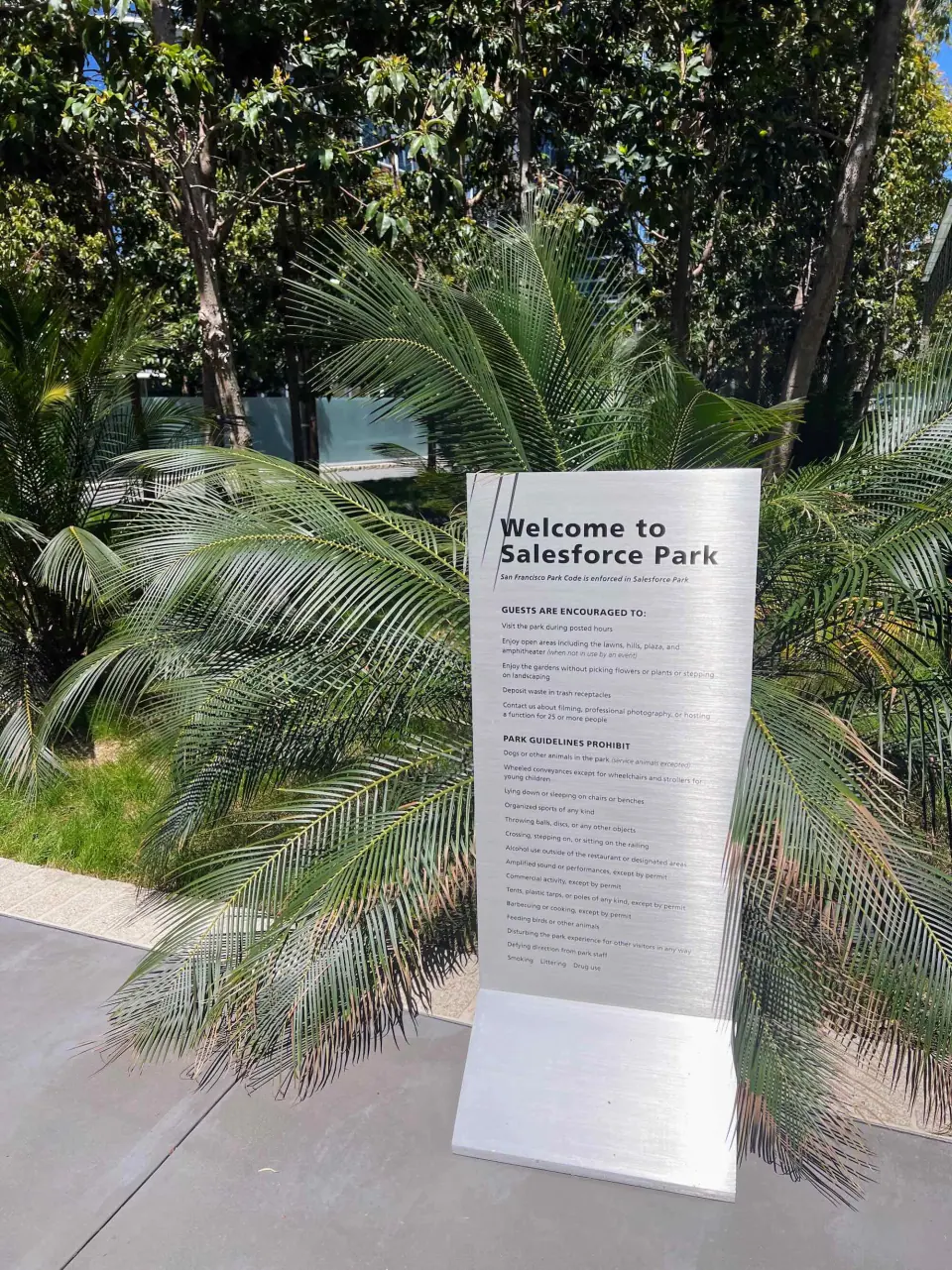
What you’ll find in the park
- Botanical gardens: there are 13 botanical feature areas, with about 600 trees and 16,000 plants and signs that explain what you are looking at.
- The amphitheater: a lawn with room for up to 1,000 people, used for free public events.
- The walking trail: a curved loop path of about half a mile runs around the park, lined with benches.
- Public art: the best-known piece is Ned Kahn’s “Bus Fountain”, a line of water jets set off by the buses moving on the deck below.
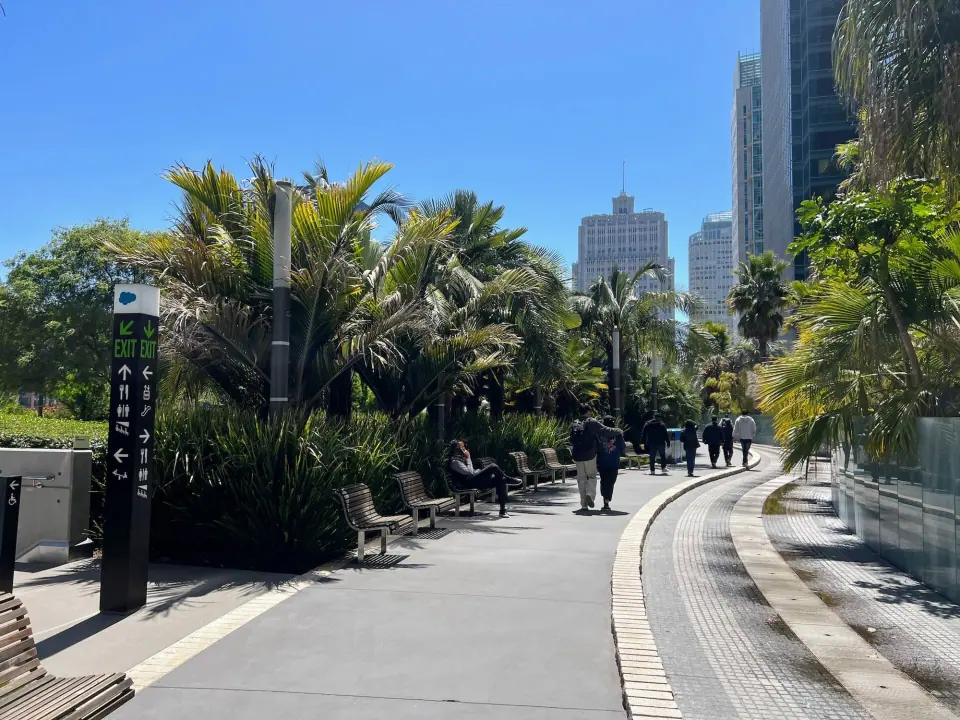
How the park was designed
The park was planned to do several jobs at once, and three design choices are worth knowing about:
- A living roof: the whole park is planted on the roof of the transit center, about 70 feet above its Grand Hall.
- Access by transit: because the park sits on top of a major transit hub, it is easy to reach without a car.
- Community use: the park runs a wide range of free public events and activities.
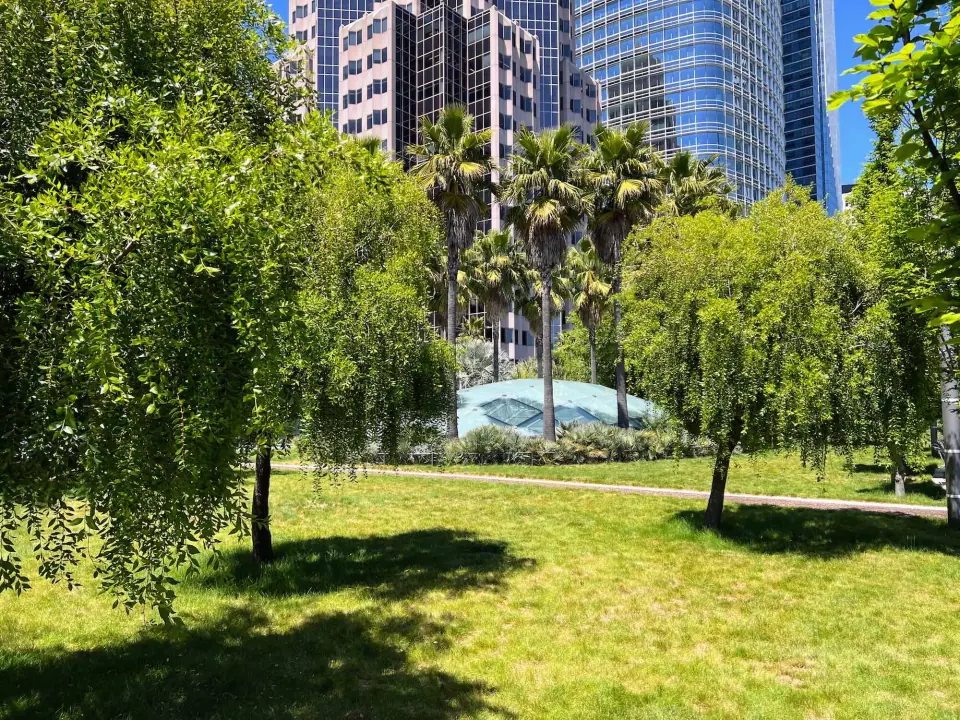
Tips for visiting
- Opening hours: as of late 2026 the park opens at 6 a.m. every day and closes at 9 p.m. from May through October and at 8 p.m. from November through April. Go in the morning if you want it quiet.
- Accessibility: the park is wheelchair accessible. Elevators in the Transit Center take you up to park level.
- Events calendar: check the park’s official website or social media channels for the schedule. The organized events are free.
Events to look out for
- Yoga and wellness classes: the free program includes yoga, meditation and tai chi.
- Dance: dance fitness, Lindy Hop swing dancing and silent disco sessions are also on the free program.
- Garden Guide: the park publishes a guide to its plants and wildlife, which you can follow on your own.
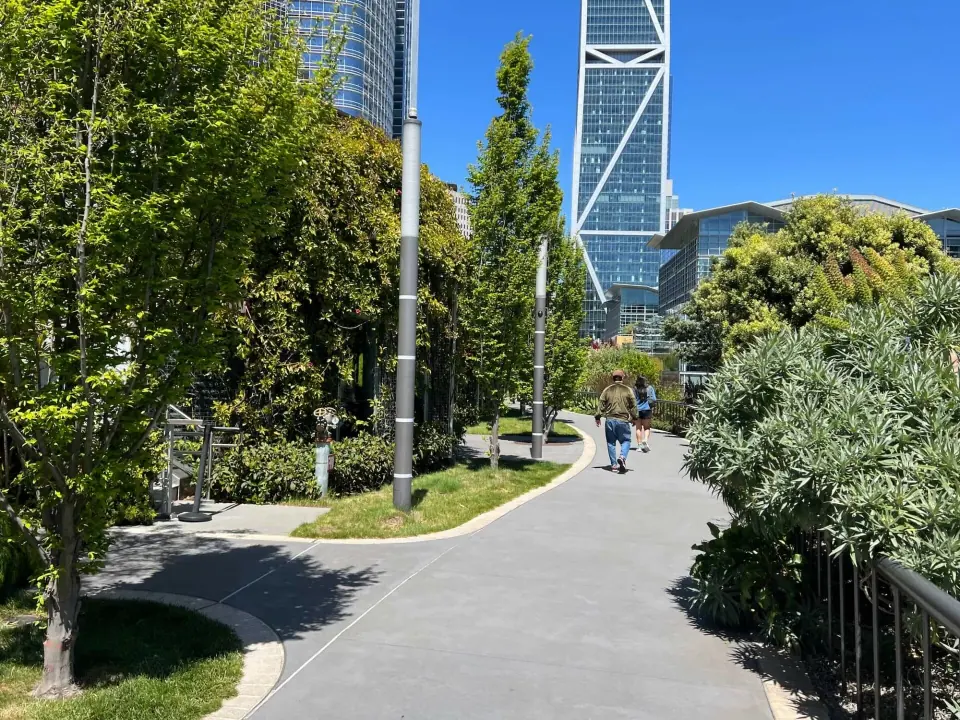
Give the park an hour if you only want to walk the loop, and longer if an event on the calendar catches your eye.
The 16th Avenue Tiled Steps and the Hidden Garden Steps
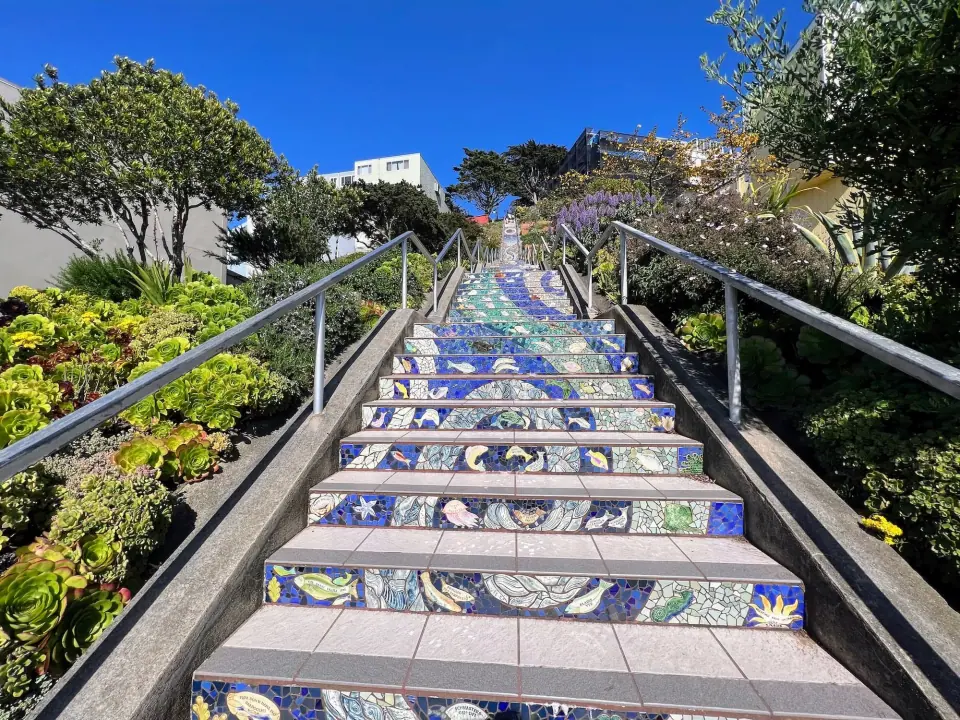
The 16th Avenue Tiled Steps are a public staircase covered from bottom to top in one continuous mosaic, and they end at a wide view over the west side of the city. They are the better known of two community art staircases covered here. The other is the Hidden Garden Steps.
How the staircases were made
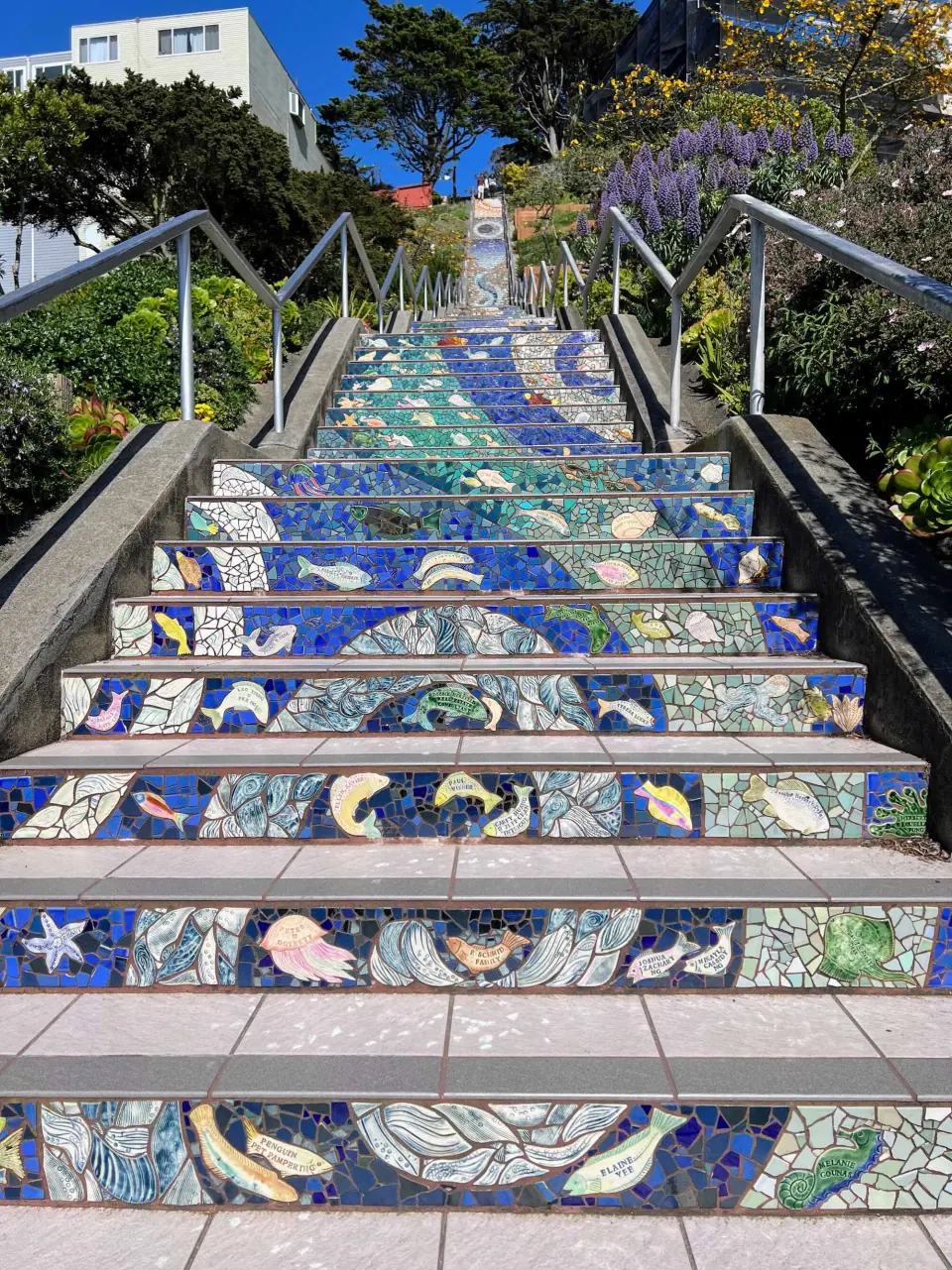
The 16th Avenue Tiled Steps opened in August 2005, two years after two residents proposed the project. Artists Aileen Barr and Colette Crutcher led the project with a team of neighborhood volunteers. The staircase is on Moraga Street between 15th and 16th Avenues in the Golden Gate Heights neighborhood and consists of 163 steps, each with its own mosaic panel, on a theme that runs from the sea to the stars. The idea came from the Escadaria Selarón in Rio de Janeiro, and the aim was to improve the look of the neighborhood and bring residents together.
The Hidden Garden Steps are sometimes confused with the 16th Avenue Tiled Steps. They are a separate staircase nearby, designed by the same two artists about six years later.
The climb and the view from the top
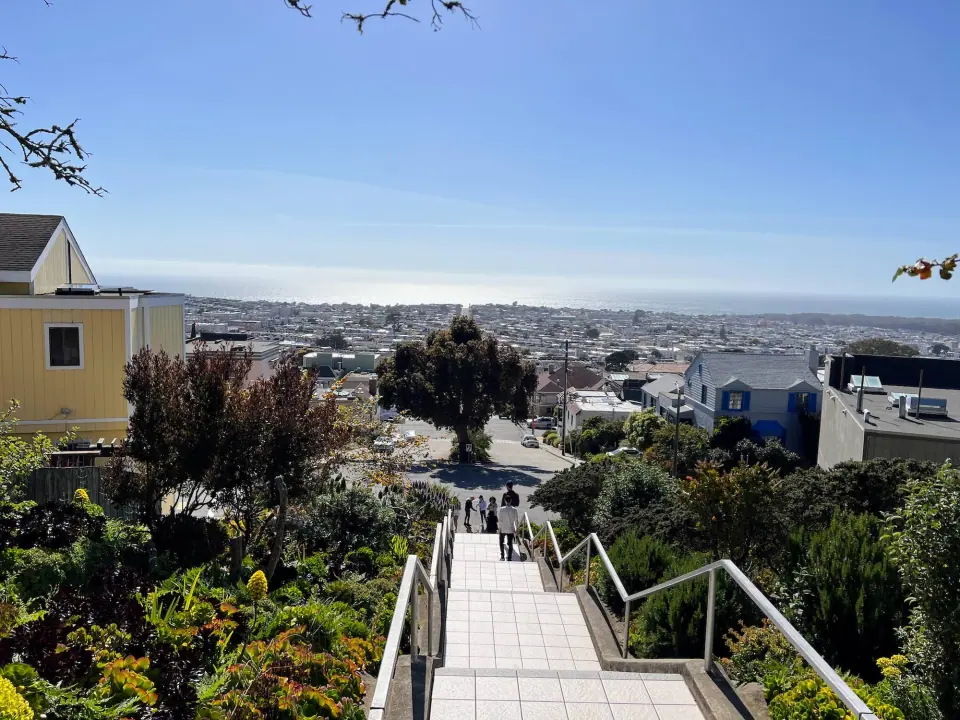
The mosaic changes as you climb. It starts with the sea and its creatures at the bottom and finishes with the sky at the top. On a sunny day the tiles catch the light, so it pays to look at the detail on each riser as you go.
The steps lead up to Grandview Park, where the view opens out over the west side of the city toward the Pacific Ocean.
Best times for photos and quiet
Go early in the morning on a weekday. The soft light brings out the colors of the mosaic and keeps shadows to a minimum, which gives you the most detailed photos, and there are fewer visitors at that hour.
Sunset is the other good time, when the fading light turns the tiles gold and the sky adds drama to the view from the top. It is also a popular time, so stick to the morning if you want the steps mostly to yourself.
The Japanese Tea Garden in Golden Gate Park
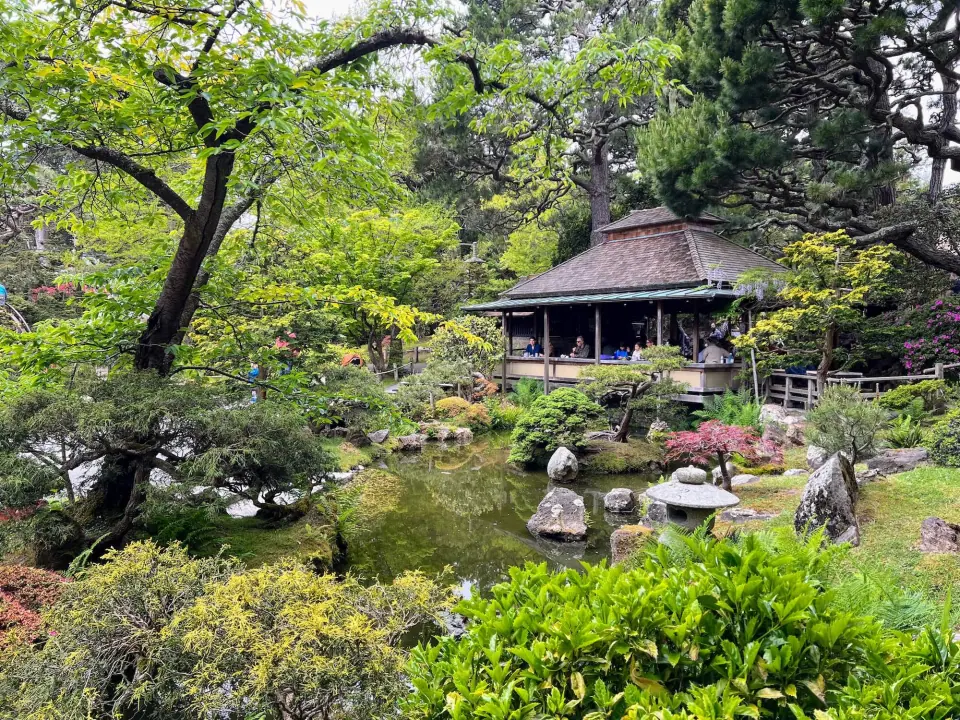
The Japanese Tea Garden is the oldest public Japanese garden in the United States and sits inside Golden Gate Park. Come here for an hour of quiet walking among ponds, bridges and traditional structures.
History of the garden
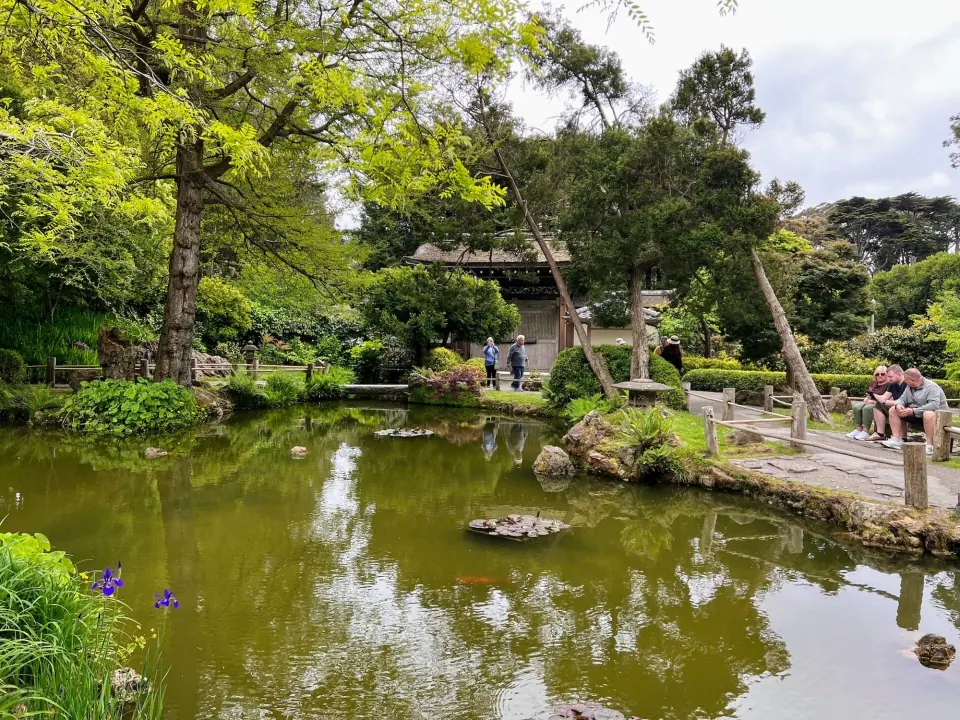
The garden was created for the 1894 California Midwinter International Exposition. George Turner Marsh built it with Japanese craftsmen as the fair’s Japanese Village, and sold it to the city afterward. The Japanese immigrant Makoto Hagiwara then managed it, turned the exhibit into a permanent garden and more than tripled its size.
What to see in the garden
- The Tea House: at the center of the garden, this is where you sit down for a cup of Japanese tea, matcha included, and snacks, with a view over the grounds.
- The Drum Bridge: a steep, high-arching bridge whose reflection in the water below makes it the garden’s classic photo spot.
- The Zen Garden: a dry landscape garden of raked gravel and rocks, designed by Nagao Sakurai and dedicated in 1953.
- The Pagoda: a five-tiered pagoda originally built for the 1915 Panama-Pacific Exposition.
- The koi ponds: stocked with brightly colored koi, and a good place to stop for a few minutes.
When to visit
The garden looks different in every season. Entry is ticketed, and as of late 2026 the garden asks every visitor to book a time slot in advance, so reserve before you go. Choose an early slot or a weekday, when fewer people are on the paths and bridges.
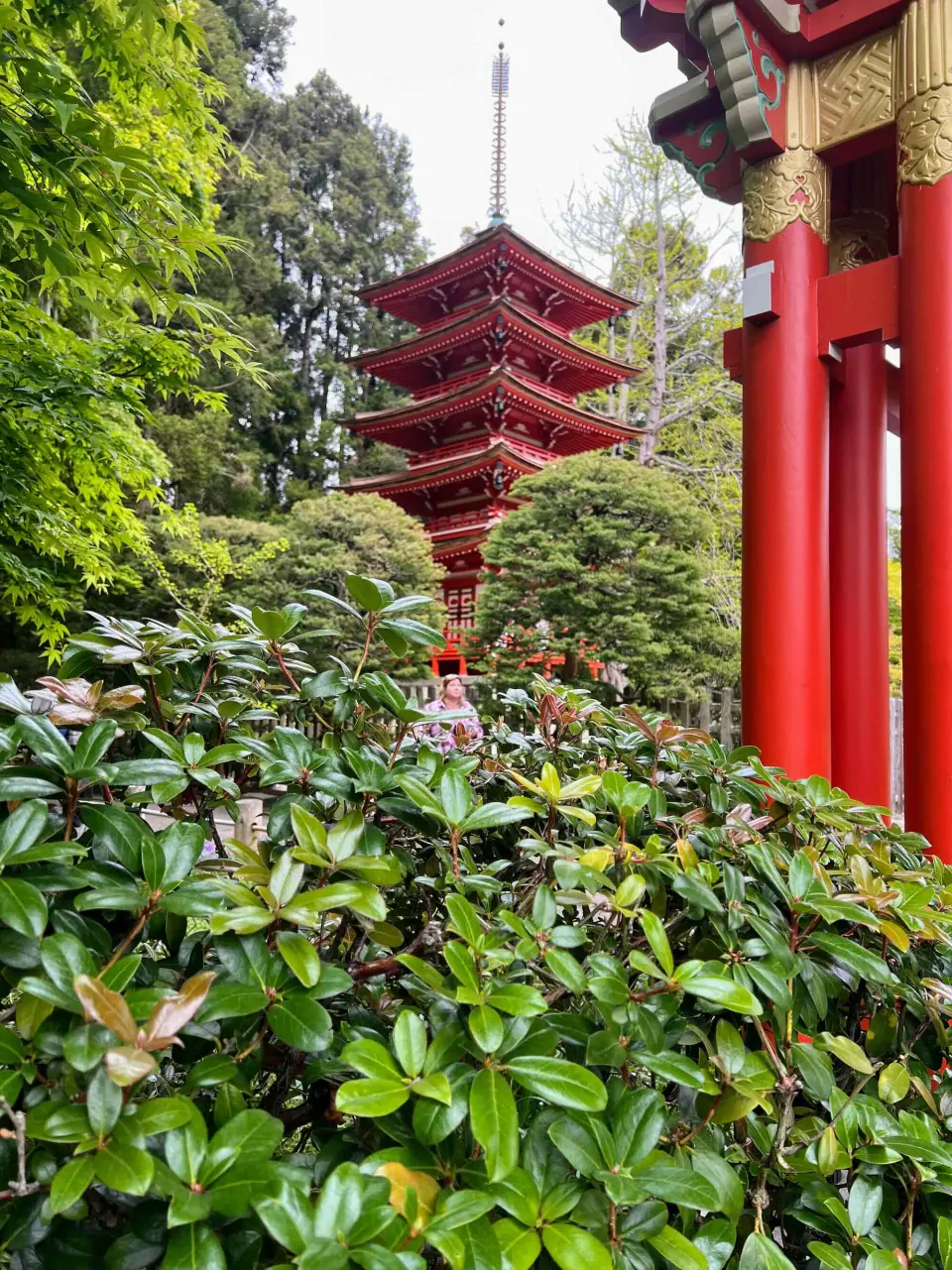
Spring is the standout season, with cherry blossoms and azaleas flowering in March and April. In autumn the Japanese maples turn red, orange and yellow.
The Filbert Steps to Coit Tower: a quieter route with a view
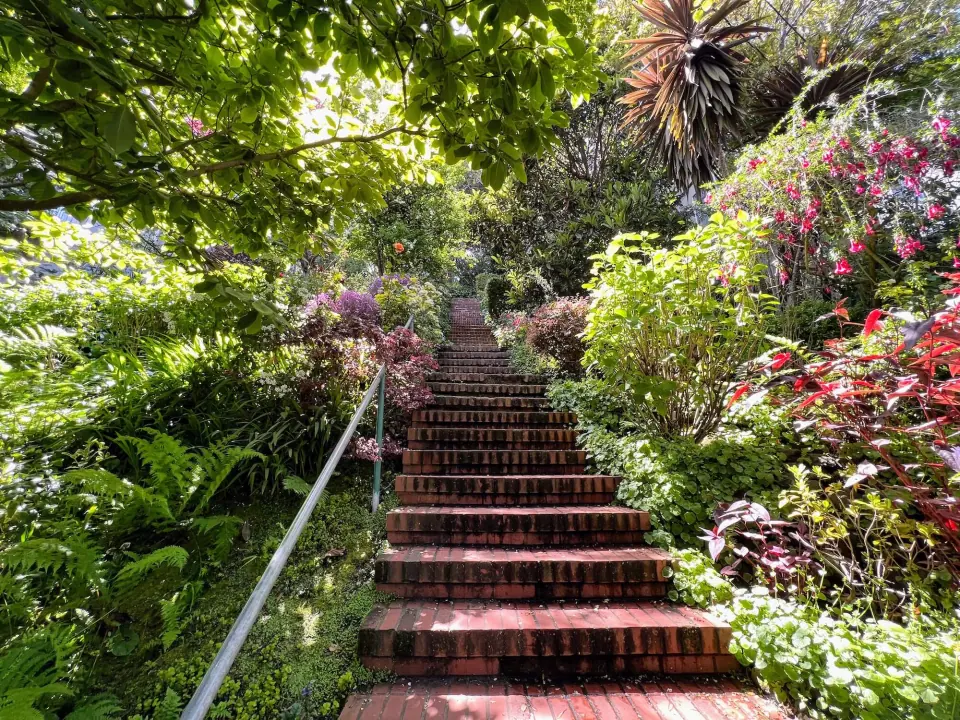
The Filbert Steps are the most rewarding way to reach Coit Tower on foot. The stairs climb Telegraph Hill past residents’ gardens, and the views of the city and the bay open up as you gain height.
The climb up the Filbert Steps
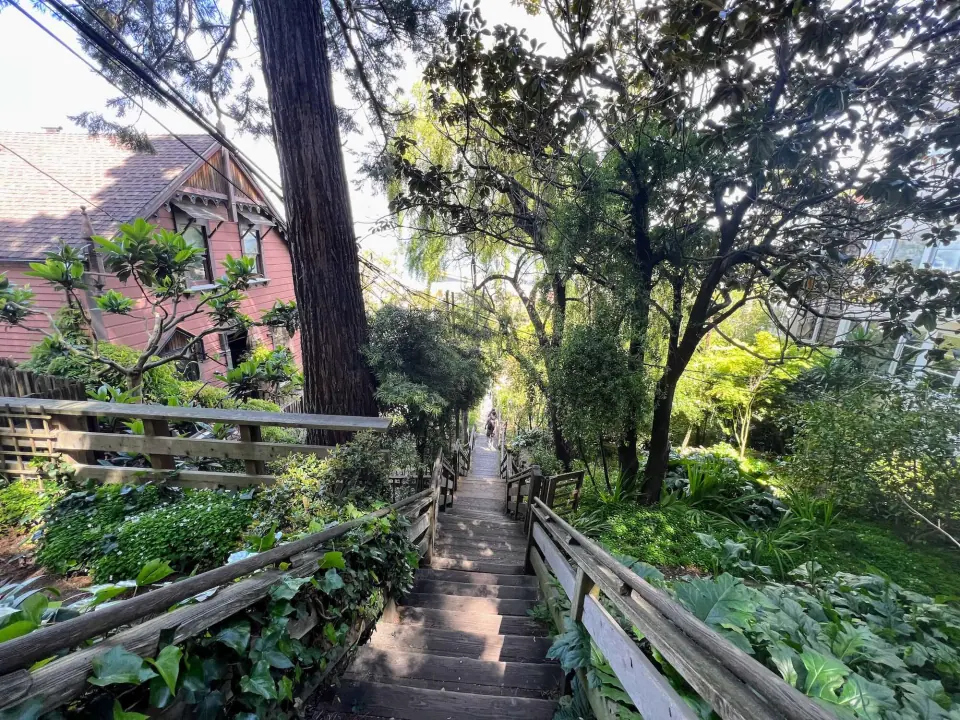
The steps begin at the eastern end of Filbert Street, where the road gives way to wooden staircases and paths through the Telegraph Hill neighborhood. As you climb, the traffic noise fades and you start to hear birds and leaves instead. The route passes gardens that residents have tended for years.
Coit Tower: history and views
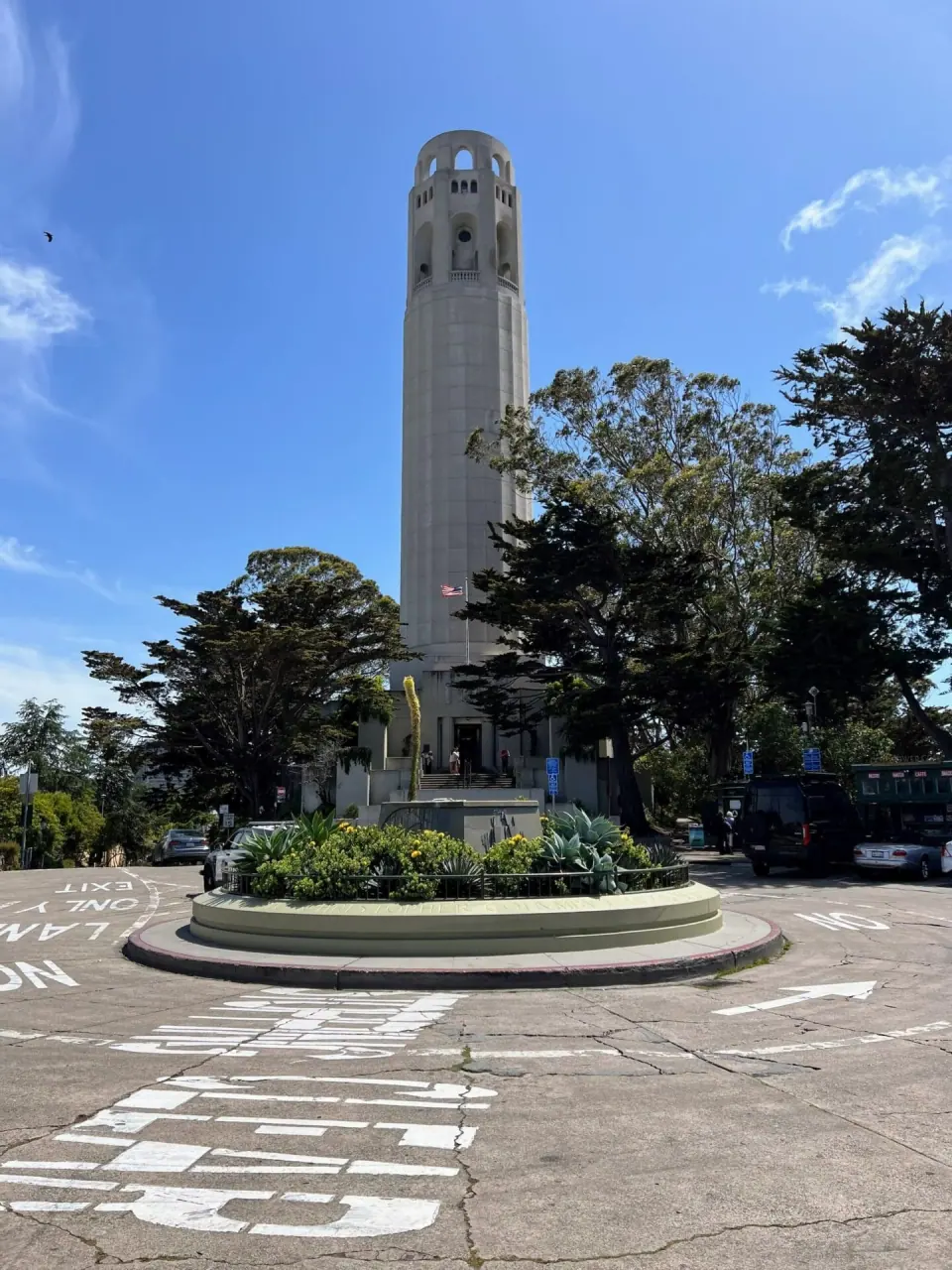
At the summit of Telegraph Hill the view stretches across San Francisco Bay from the Golden Gate to the Bay Bridge, with the city in between. Coit Tower was built in 1932 and 1933 with money left by Lillie Hitchcock Coit to add to the beauty of the city she loved. It is often described as a firefighters’ memorial or a fire-hose nozzle, but neither story is true. The design is art deco. The murals inside were painted during the Great Depression by artists of the Public Works of Art Project.
How to make the most of the climb
Start in the morning, when the air is fresh and the light over the city is soft. Wear comfortable shoes, because the steps are steep and uneven in places, and bring water. Take the climb slowly and stop for the gardens and the changing views.
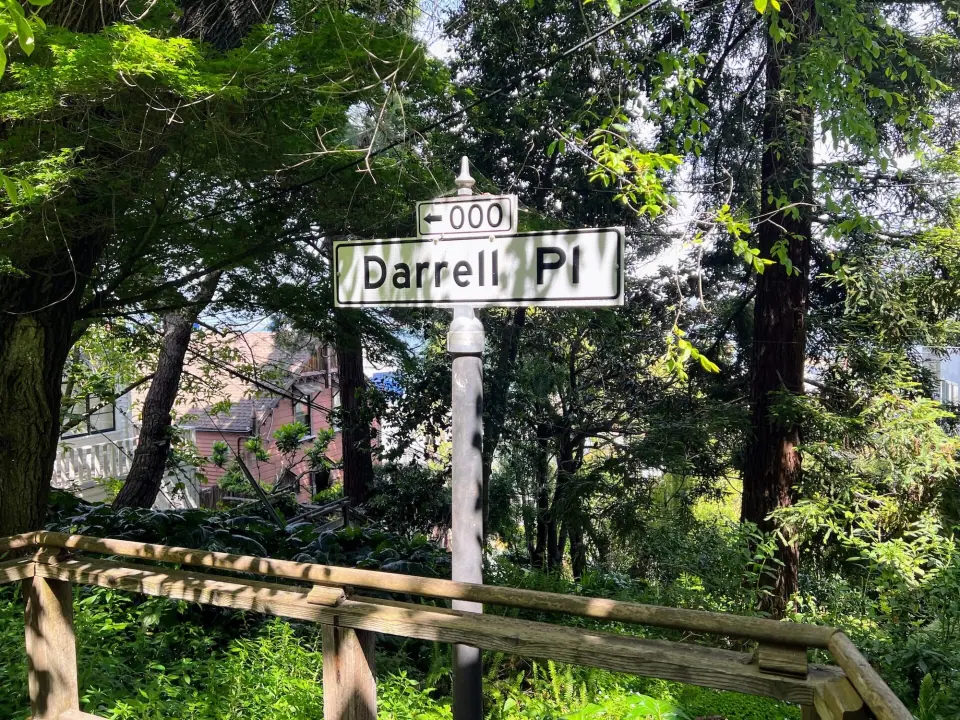
If you carry a camera, you’ll use it for everything from close-ups of flowers to the wide views at the top. Watch and listen for the wild parrots of Telegraph Hill, which are often seen in the area.
At Coit Tower, look at the murals inside first, then buy a ticket for the elevator to the observation deck for a 360-degree view of San Francisco. As of late 2026 an adult ticket costs $11 for non-residents.
City Lights Booksellers & Publishers: a literary landmark
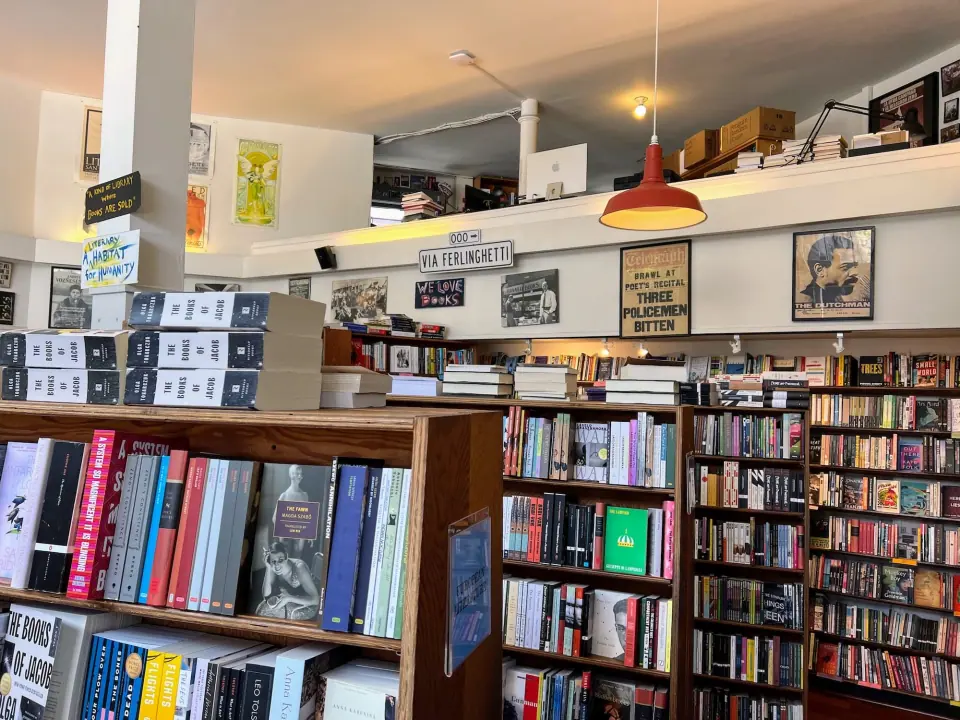
City Lights is a bookstore and publisher at 261 Columbus Avenue, where North Beach meets Chinatown, founded in 1953 by poet Lawrence Ferlinghetti and Peter D. Martin. It was the nation’s first all-paperback bookstore, it became a meeting point for the Beat Generation writers in the 1950s, and it still champions avant-garde and counterculture literature.
Why City Lights matters in American literary history
City Lights came to national attention after it published Allen Ginsberg’s “Howl and Other Poems” in 1956. The book’s explicit content led to an obscenity trial in 1957, and City Lights won. The verdict was a landmark for free speech and set a precedent for publishing controversial literature in the United States. Since then the store and its publishing arm have put out work by American and international authors who challenge the status quo.
The bookstore was declared a historic landmark in 2001. For visitors it is the place to connect with the Beat Generation’s fight against censorship and conformity.
What you’ll find on the shelves
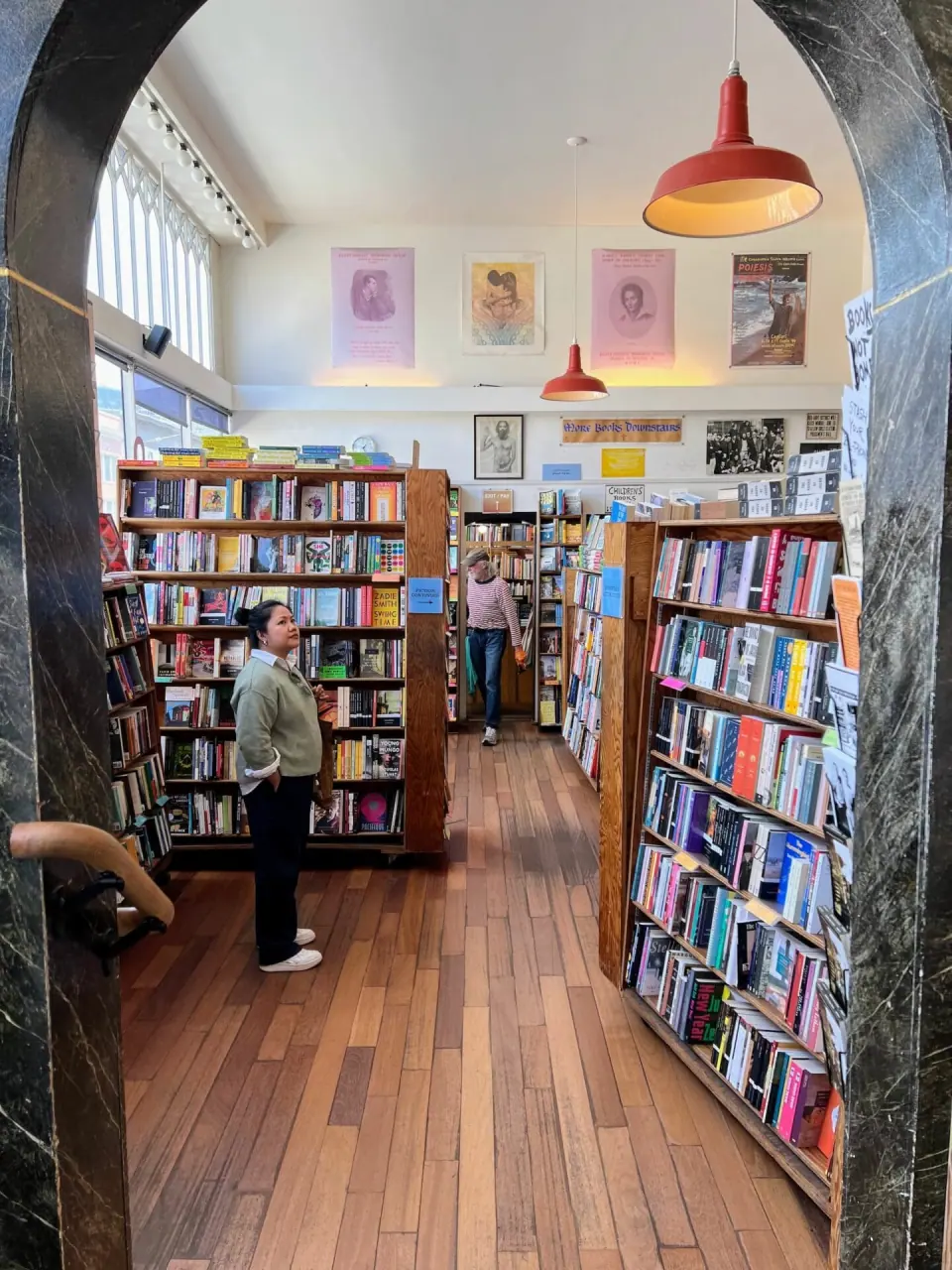
The store has three floors of new hardcovers and paperbacks, and one of its rooms is given over entirely to poetry, a nod to the Beat legacy. City Lights has also been a publisher since 1955, when it launched its Pocket Poets Series, and it has well over two hundred titles in print.
You can browse the Beat writers themselves, among them Jack Kerouac, William S. Burroughs and Ferlinghetti, next to titles from new and established authors. The selection leans toward alternative and independent voices, progressive politics and social justice.
Events and readings
City Lights hosts book launches, author readings and panel discussions on current social issues, with both local and international authors. The events calendar is updated continually, so check it before you go if you’d like to hear a writer in person.
Balmy Alley and the Mission District: murals, food and nightlife
Balmy Alley is a narrow lane in the Mission District where murals cover the buildings, fences and garage doors from one end to the other. Walk it first, then stay in the Mission for the food, the shops and the music venues.
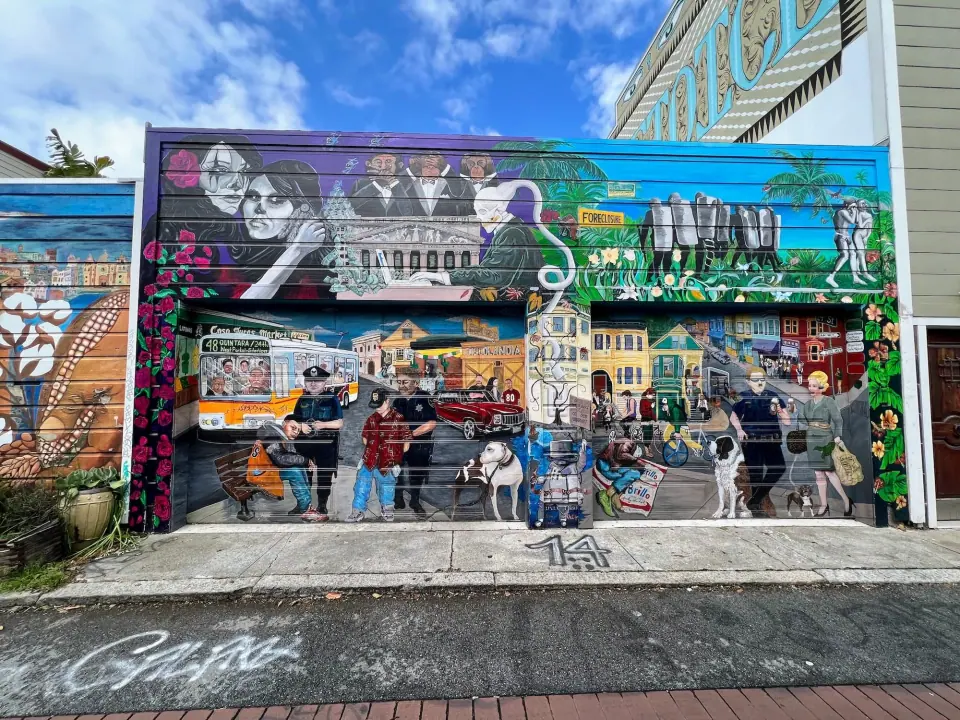
The murals of Balmy Alley and what they mean
The earliest murals date from 1972. A second wave followed in 1984, when a group of artists painted the alley in protest at U.S. intervention in Central America and in celebration of the region’s indigenous cultures. The range of subjects has widened since, from cultural heritage to gentrification in the neighborhood. Each mural tells a story, which may be a personal one, a comment on history or a hope for the future.
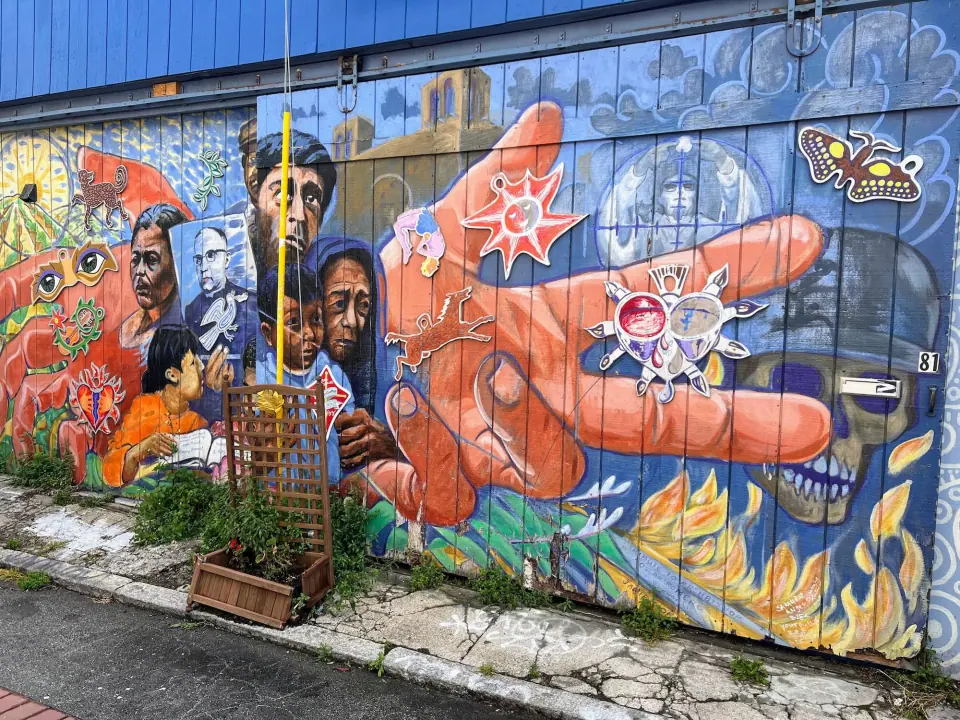
Walk slowly and look at the details. The well-known “MaestraPeace” mural, which shows female icons from history and fiction, is not in the alley. It covers the Women’s Building at 3543 18th Street, elsewhere in the Mission, and was painted in 1994. The alley keeps changing, and the murals make more sense once you know the events behind them.
The Mission District as a cultural center
The Mission District takes its name from the 18th-century Mission Dolores and is one of San Francisco’s oldest neighborhoods. Its culture comes mainly from its Latino communities. Today you’ll find Victorian homes, indie bookstores, galleries and workshops, along with cultural festivals, music and performance.
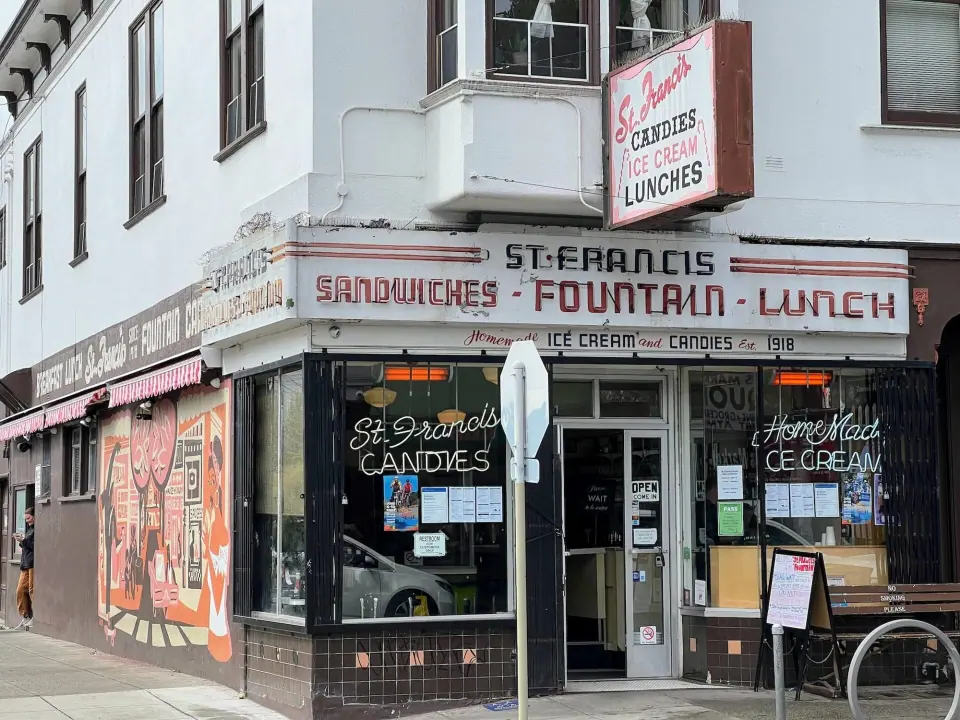
The Mission is also known for its food, from traditional Mexican taquerias and Latin American restaurants to farm-to-table kitchens. Valencia Street and Mission Street are the main thoroughfares, and both are lined with places serving burritos, artisanal coffee and craft cocktails.
Where to eat, shop and go out
Eat a burrito at one of the many taquerias, since it is the dish most closely tied to the Mission. For shopping, Valencia Street has bookstores, vintage clothing shops and boutiques selling handmade jewelry and locally designed goods.
For a night out, the historic Roxie Theater screens independent and foreign films, and The Chapel, at 777 Valencia Street, puts on live music. The district also holds festivals and street fairs, including the Dia de los Muertos celebration and Carnaval San Francisco.
Noe Valley: a village-like neighborhood inside the city
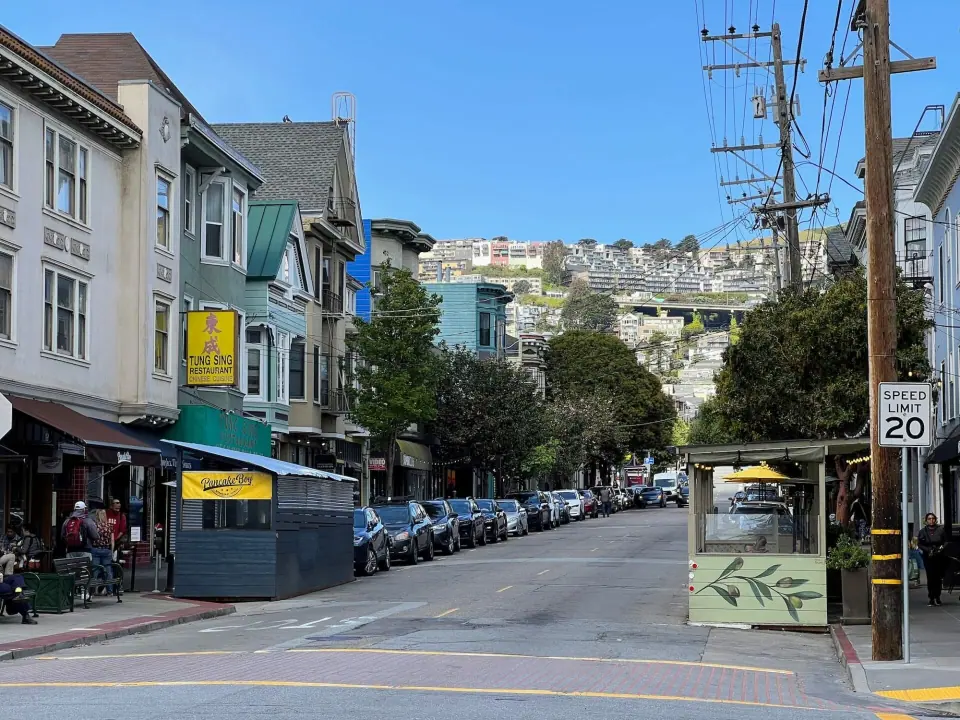
Noe Valley is a residential neighborhood known for Victorian and Edwardian homes, sunny weather and a family-friendly feel. Its main street, 24th Street, is lined with coffee shops, boutiques and bakeries, and that is where you should spend most of your time.
What the neighborhood is like
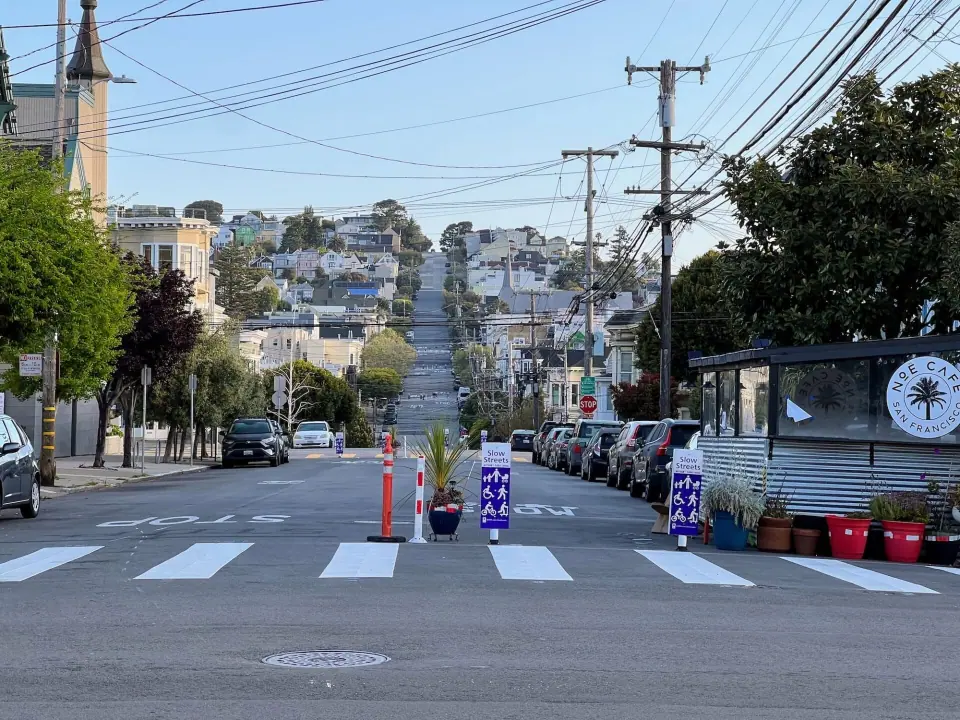
The streets are lined with Victorian homes, and the neighborhood is one of the sunniest and most family-friendly in the city. Most of the shops and restaurants are on 24th Street between Church and Diamond streets.
The businesses on 24th Street are mostly small and local, from bakeries to an independent bookstore.
Cafes, shops and local landmarks
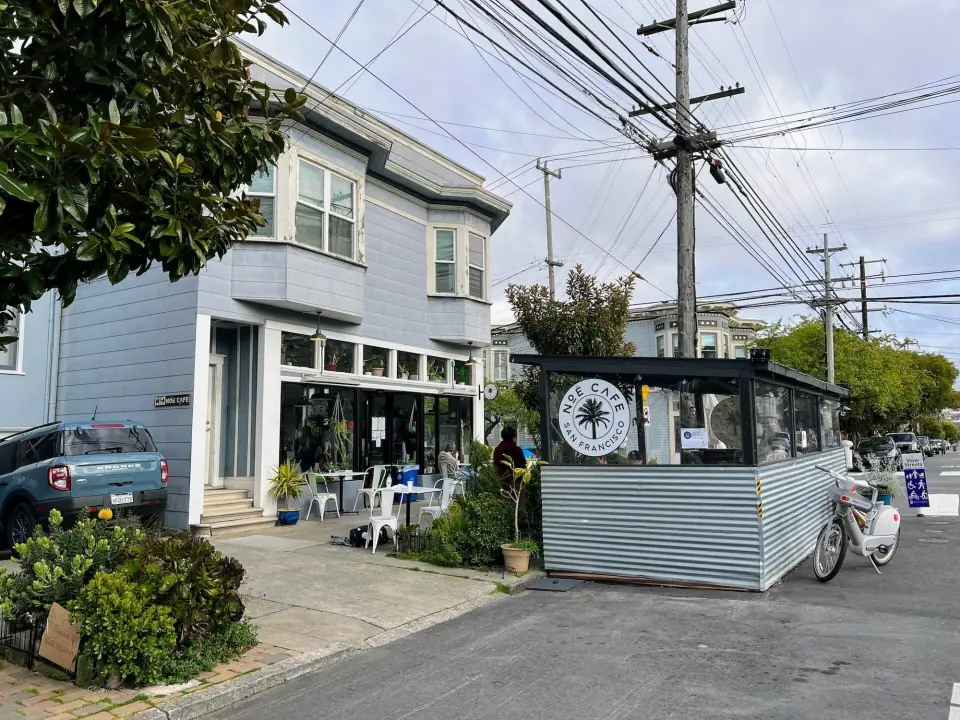
- Cafes: Martha & Bros. Coffee Co. is a neighborhood staple with two shops in Noe Valley. Noe Valley Bakery, at 4073 24th Street, sells bread, pastries and coffee to take away.
- Shops: Noe Valley Books, at 3957 24th Street, is an independent general bookstore. Just For Fun & Scribbledoodles, at 3982 24th Street, has sold toys, art supplies, cards and gifts since 1987.
- Local landmarks: Noe Valley Town Square, on 24th Street, is the community gathering spot. It has a children’s playground, free concerts and classes, and a farmers’ market on Saturday mornings.
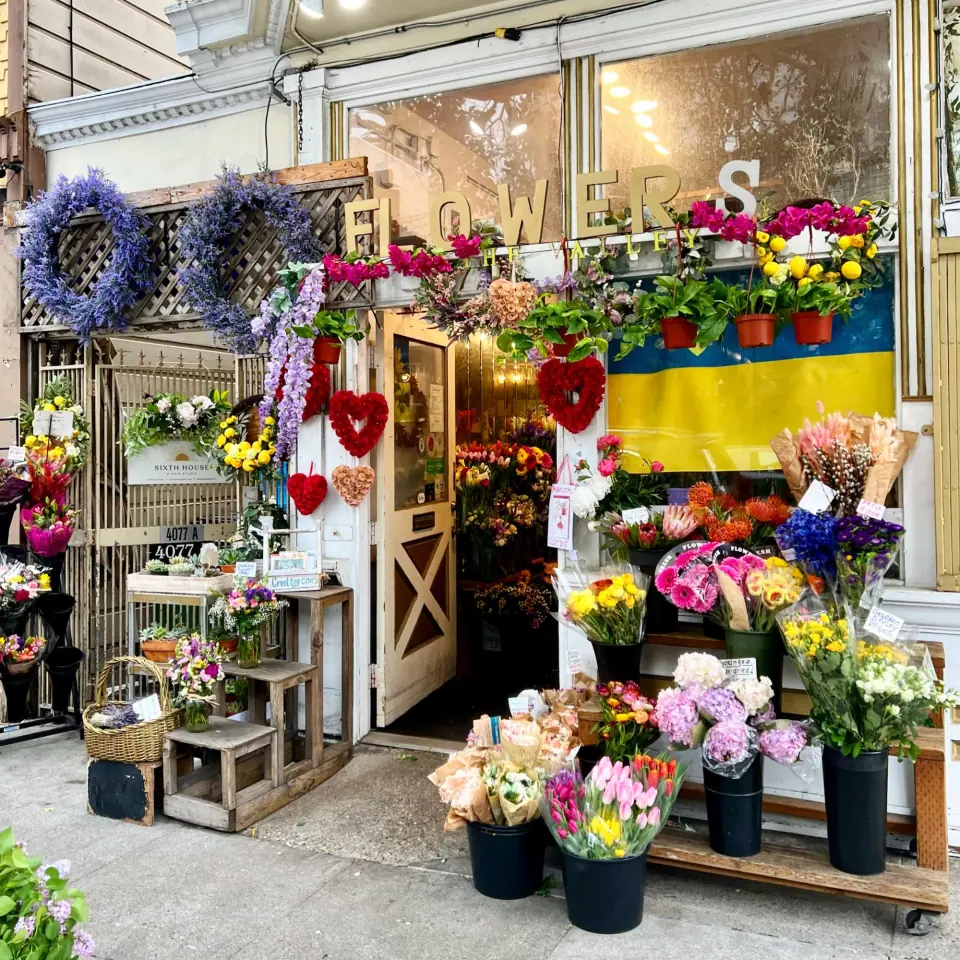
Noe Valley suits an unhurried afternoon of coffee, browsing and a walk, more than a checklist of sights.
Planning your visit to these seven places
Mornings are the best time for four of the seven stops. Salesforce Park, the 16th Avenue Tiled Steps, the Japanese Tea Garden and the Filbert Steps are all at their quietest early in the day, and the steps and the garden are calmer still on weekdays. You can’t be in four places at once, so choose one or two for the morning and leave City Lights, the Mission District and Noe Valley for later.
What changes with the seasons
Spring brings the cherry blossoms and azaleas at the Japanese Tea Garden, and autumn brings its maple colors. Event calendars change all year, at Salesforce Park and at City Lights alike, so look them up shortly before your trip.
What it costs
Salesforce Park, both staircases, Balmy Alley and the Filbert Steps are free. The Japanese Tea Garden is ticketed, and so is the elevator to the top of Coit Tower.
If you only have one day
Pick the places that match what you like. The park, the tea garden and the two staircases are the outdoor options, City Lights and Balmy Alley cover literature and art, and the Mission and Noe Valley are for eating, shopping and seeing how the neighborhoods live.