On this page 17 sections
- The historic bell tower: Tour Pey-Berland
- Go to the Sunday market on the Quai des Chartrons
- Visit the Museum of Contemporary Art
- Walk along the river
- Visit the Grand Théâtre de Bordeaux
- La Cité du Vin
- Take a trip to Château Haut-Brion
- Musée d’Aquitaine, the museum of art and history
- Go on a food tour
- Wine-tasting tours at Château Malartic-Lagravière and other estates
- The tourist office’s Bordeaux walking tour
- Bordeaux wine tasting
- Cheese tasting
- Where to stay in Bordeaux
- Where to eat in Bordeaux
- Go to the market
- Is Bordeaux worth visiting?
Bordeaux is one of the best-known destinations in France, a city of 18th-century streets, markets and historic landmarks that is small enough to explore almost entirely on foot. This guide covers the main sights, the wine and food experiences worth booking, and where to stay and eat.
The historic bell tower: Tour Pey-Berland
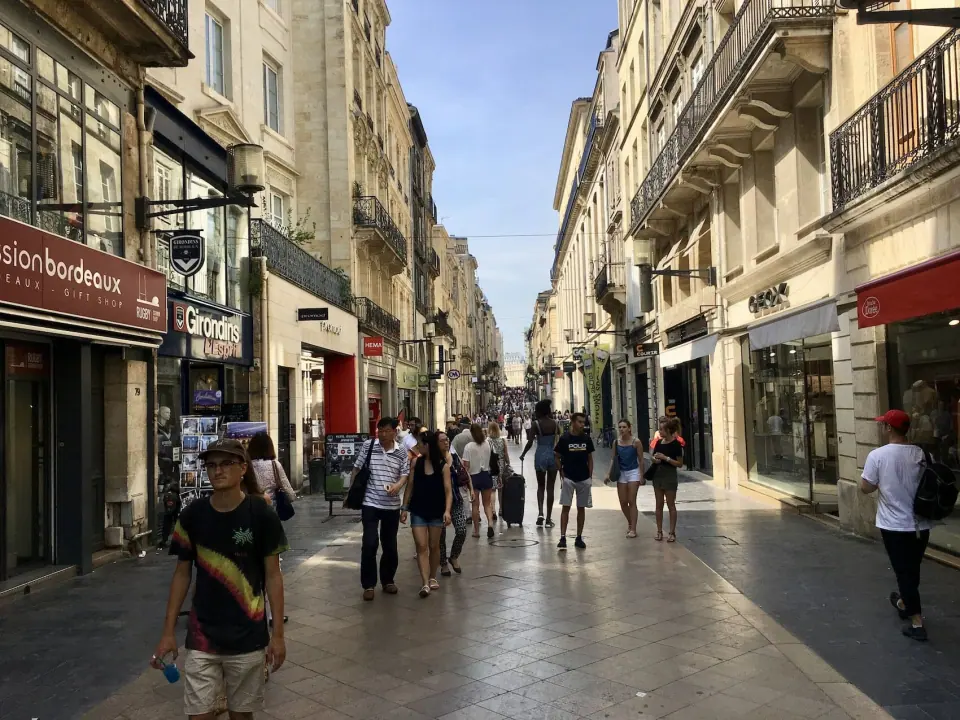
Climb the Tour Pey-Berland first. It is the free-standing bell tower of the Cathédrale Saint-André, in the center of the city, and 230 steps take you to a panoramic view of Bordeaux. The tower was built between 1440 and 1500 at the initiative of Archbishop Pey Berland. Entry is ticketed (9 € as of late 2026, free for under-26s).
Go to the Sunday market on the Quai des Chartrons
Bordeaux has no regular night market, whatever older guides say. The market to see on the Quai des Chartrons is held on Sunday. Food stalls trade from 7 am to 1 pm, and the restaurant, craft and flower stands stay until 4 pm, so you can come for lunch by the river.
Visit the Museum of Contemporary Art
The CAPC, Bordeaux’s museum of contemporary art, is at 7 rue Ferrère, a short walk from the Quai des Chartrons. It is open from Tuesday to Sunday, 10 am to 6 pm, and closed on Mondays and public holidays.
Walk along the river
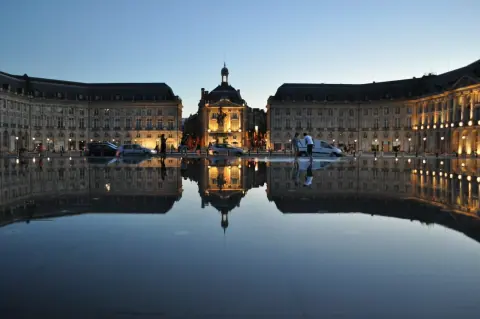
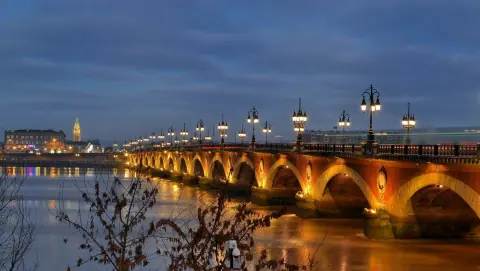
The riverbank is one of the best places to see Bordeaux on foot and to photograph its architecture. Start at Place de la Bourse, the 18th-century square designed by Jacques Gabriel, and walk upstream to the Pont de Pierre. The bridge was planned under Napoleon, built between 1819 and 1822, and has 17 arches. Since 2016 it has been closed to cars. Downstream, the Pont Jacques Chaban-Delmas is a vertical-lift bridge that opened in 2013.
Visit the Grand Théâtre de Bordeaux
The Grand Théâtre de Bordeaux opened on 17 April 1780 and stands on Place de la Comédie, in the center of the city. The architect Victor Louis gave it a portico of twelve Corinthian columns topped by twelve statues, the nine Muses and three goddesses. It is the home of the Opéra National de Bordeaux and its ballet company, and it still stages operas, concerts and dance.
La Cité du Vin
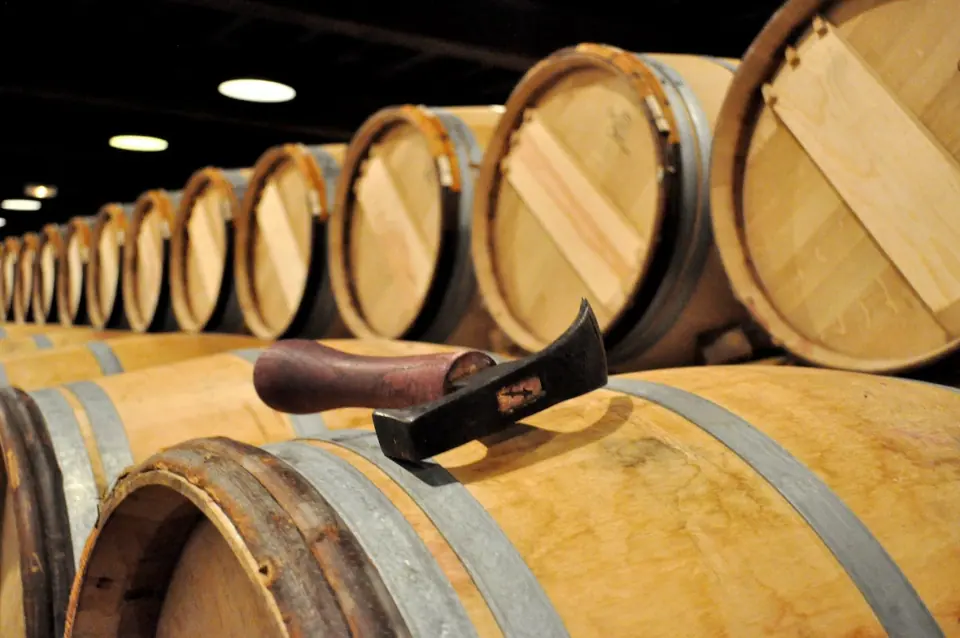
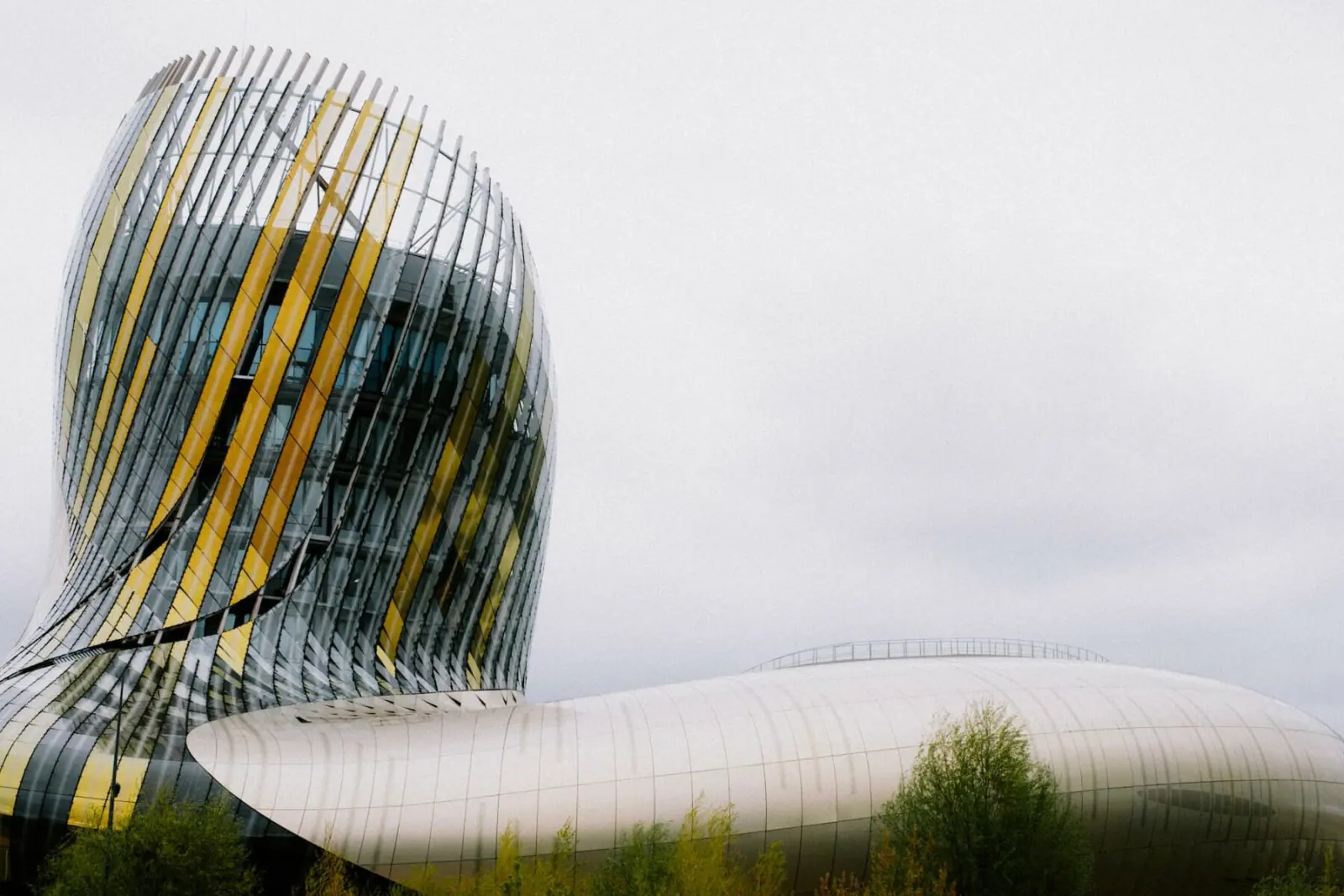
La Cité du Vin, at 134 Quai de Bacalan, is the stop for anyone interested in wine. The permanent exhibition covers 3,000 square meters, with six themed areas and eighteen modules that run from Antiquity to today.
The exhibits can easily fill several hours, and the visit ends at the belvedere, a panoramic viewpoint where a tasting is offered. Check which ticket includes it when you book.
Take a trip to Château Haut-Brion
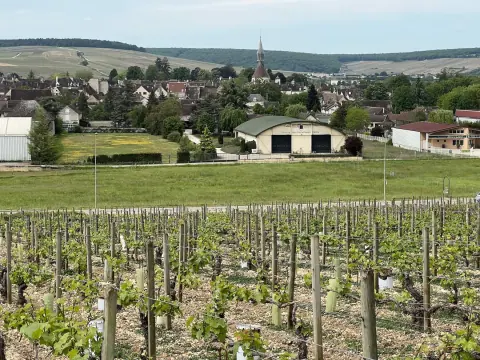
Château Haut-Brion is in Pessac, just outside the city, and it is one of the most famous vineyards in Bordeaux: a First Growth in the 1855 classification, and the only one in the Pessac-Léognan appellation. Most of its wine is red, with a small production of dry white. You cannot simply turn up. Visits are arranged through the request form on the estate’s website, so apply well ahead.
Musée d’Aquitaine, the museum of art and history
Visit the Musée d’Aquitaine, at 20 cours Pasteur, to learn about the past of Bordeaux and the surrounding region. It is one of the largest regional history museums in France outside Paris. The galleries run from prehistory to the present, and include Montaigne’s tomb and rooms on the Atlantic trade and slavery in the 18th century. It is closed on Mondays, and the permanent exhibition is free on the first Sunday of the month, except in July and August.
Go on a food tour
A food tour is the quickest way to find out where to eat. Local companies run many of them. A guide takes you to food shops and restaurants and explains local customs along the way.
Wine-tasting tours at Château Malartic-Lagravière and other estates
Château Malartic-Lagravière, in Léognan, south of Bordeaux, is a classified growth of the Graves for both its red and its white wine. Check its site for visits before you go. If you would sooner not organise transport, the tourist office runs a half-day Châteaux & Terroirs coach tour with two château visits and tastings. It leaves at 1:30 pm, returns at 6:30 pm, and is guided in French and English.
The tourist office’s Bordeaux walking tour
The tourist office’s Bordeaux Walking Tour gives you an overview of the city and fits easily into a day. Book it online and meet the guide at the Tourist Office, 12 cours du XXX Juillet. The tour lasts about two hours and is given in French and English. Keep your smartphone handy for a map and a translation app if you want to follow the French commentary too. It takes in the 18th-century architecture of the UNESCO-listed center and the Saint-Rémi and Saint-Pierre quarters.
Bordeaux wine tasting
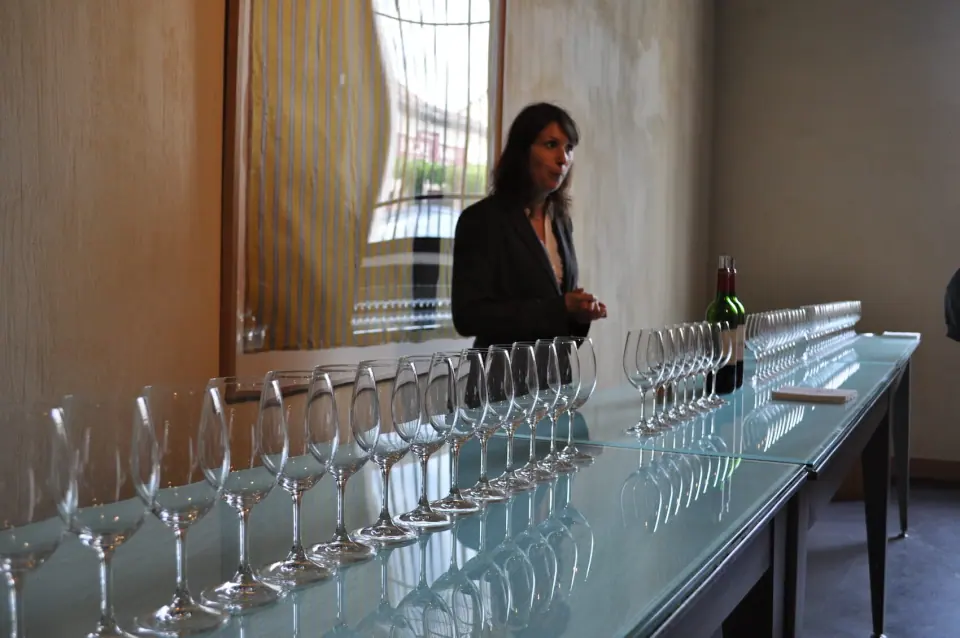
There are dozens of ways to taste wine in Bordeaux. The simplest is to walk into a wine bar or wine shop in the city and try a few glasses from different appellations.
The best place to start is the Bar à Vin, at 3 cours du XXX Juillet, on the ground floor of the Maison du Vin de Bordeaux, the headquarters of the Bordeaux wine trade council. It serves around thirty Bordeaux wines, all by the glass: reds, dry and sweet whites, rosés, clairets and sparkling crémants. It is open from Monday to Saturday, 11:30 am to 10 pm, and closed on public holidays.
Cheese tasting
For cheese, go to the covered markets. The Marché des Capucins, described below, and Les Halles de Bacalan, at 10 esplanade de Pontac near La Cité du Vin, both have food stalls. Les Halles de Bacalan is open from Tuesday to Sunday.
The Bar à Vin also serves plates of cheese and charcuterie, so you can pair your cheeses with wines from the region.
Where to stay in Bordeaux
For luxury, look at the InterContinental Bordeaux – Le Grand Hôtel, at 2 Place de la Comédie, opposite the Grand Théâtre, which has a Guerlain spa. For something more affordable, you have numerous options. Check Airbnb for less conventional lodging, or look for one of the hostels in town on a site such as Hostelworld.
Where to eat in Bordeaux
Eat at a bistro or brasserie to try the cooking of south-west France. Brasserie Bordelaise, at 50 rue Saint-Rémi, serves regional charcuterie and grilled beef every day from noon to midnight. La Tupina, at 6 rue Porte de la Monnaie, has cooked the food of Gascony since 1968. For a more upscale meal, Le Pressoir d’Argent Gordon Ramsay, in the InterContinental, holds two Michelin stars. For something casual and quick, eat at a market counter.
Go to the market
The main covered market is the Marché des Capucins, on Place des Capucins. It is open from Tuesday to Friday, 6 am to 2 pm, and on Saturday and Sunday from 5:30 am to 2:30 pm. It is closed on Mondays. Come to see how local people shop, and sample the food.
Is Bordeaux worth visiting?
Yes. Bordeaux has plenty of history and culture, and it is easy to get around, so you can see most of its sights without much effort. If you are planning a winter trip instead, consider Martinique, a French island in the Caribbean.
Bordeaux Tourism official website: bordeaux-tourism.co.uk
Bordeaux map:
We also cover other French cities and regions:
- La Rochelle
- Nice
- Dijon
- Bordeaux
- Burgundy