On this page 8 sections
- Frigiliana at a glance
- How far is Frigiliana from Málaga and Nerja?
- History and culture of Frigiliana
- What to see in Frigiliana: old quarter, castle and fountain
- Using Frigiliana as a base: Cómpeta, the coast and village life
- Practical tips for visiting Frigiliana
- Driving the mountain road from Torrox to Frigiliana
- Before you go: official information and map
Frigiliana at a glance
Frigiliana is one of the best white villages in Andalusia, set in the hills above Nerja and about an hour by car from Málaga. This guide covers its Moorish old quarter, the ruins of Lízar Castle, the trails of the Sierra de Almijara, the scenic road in from Torrox and the practical details of when to go, how to get there and what to eat. Come for whitewashed houses, balconies full of flowers and a slower pace than the coast.
How far is Frigiliana from Málaga and Nerja?
Frigiliana is about 60 kilometers from Málaga, roughly an hour’s drive. That makes it an easy day trip from the city of Málaga, or a quiet base in the countryside with a city close by.
From Nerja it is closer still: about 6 kilometers, a short drive up the road that climbs from the town.
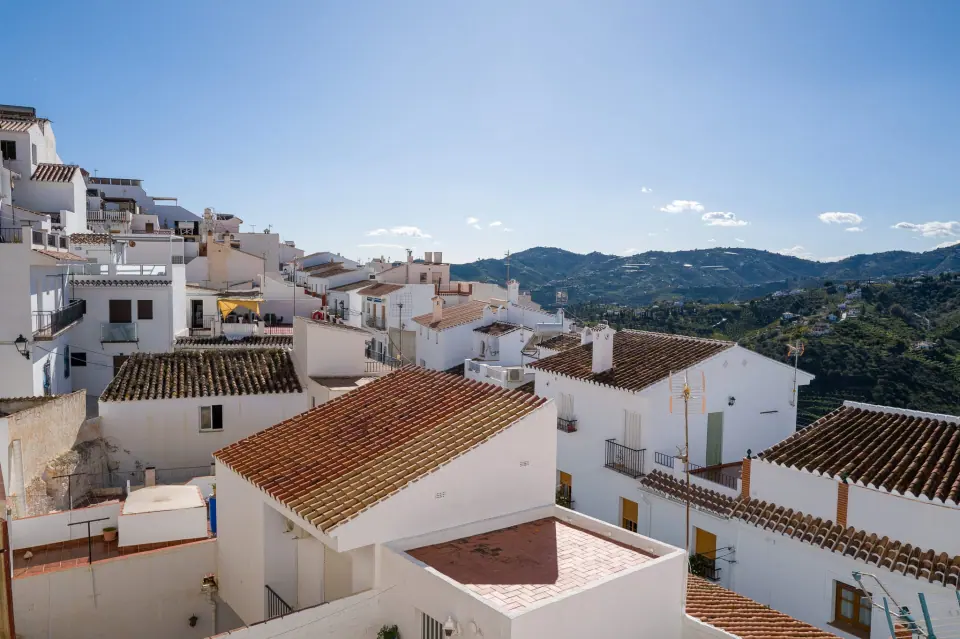
Being this near to both means you can sleep in the hills and still reach the beach in minutes and the city in about an hour. The village also works as a starting point for the rest of the region, and its lanes still follow the layout the Moors gave them.
History and culture of Frigiliana
Frigiliana’s street plan is Moorish. Narrow lanes wind steeply uphill and open onto viewpoints and small courtyards, a layout designed to give shade in the heat and to be defended in a conflict. You notice it as soon as you start climbing.
The key event in the village’s history is the battle of the Peñón de Frigiliana in 1569, when the Moriscos of the area made their last stand during their uprising. Twelve ceramic panels in the old quarter tell the story as you walk, so you can follow it without a guide. Christian and Moorish influences sit side by side here, and that mix gives the village its character. It is a good place to see how cultures both coexisted and clashed in medieval Spain.
Every year the Festival of Three Cultures marks the Christian, Muslim and Jewish heritage of the region with music, dance and food. If you want to understand the traditions that shaped Frigiliana and the wider region, this is the moment to come.
Local craftspeople keep older techniques going, passed down through generations. You can visit workshops and galleries showing pottery and weaving alongside more contemporary art. Buying direct from a workshop is also the simplest way to know a piece was made here.
What to see in Frigiliana: old quarter, castle and fountain
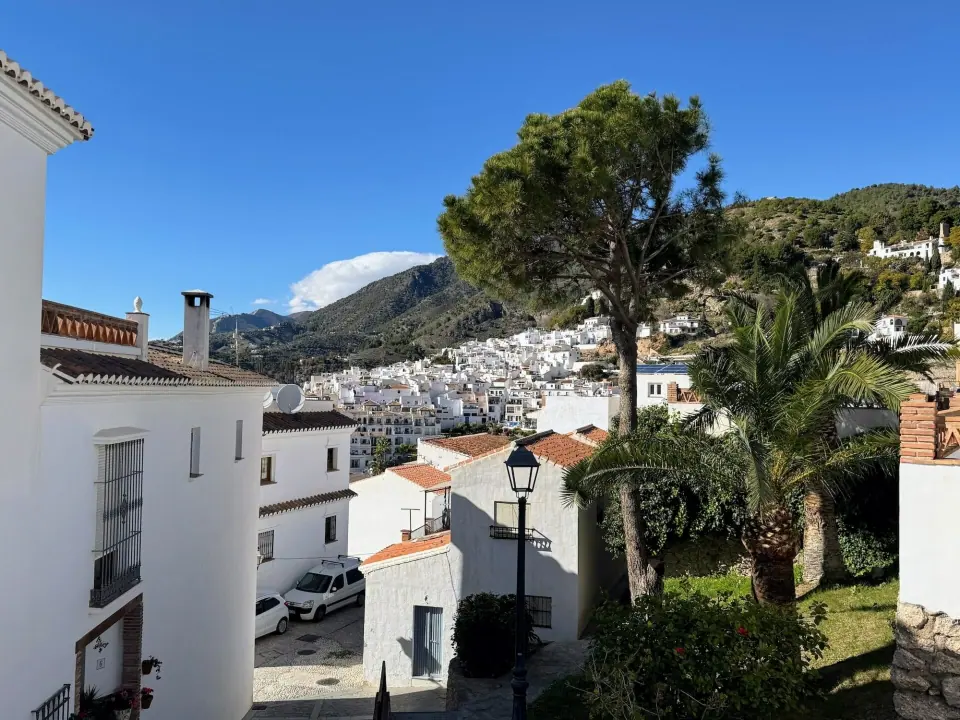
Start in the old quarter, walk up to Lízar Castle for the view, and look for the old fountain, La Fuente Vieja. If you have time left, the trails of the Sierra de Almijara begin just outside the village.
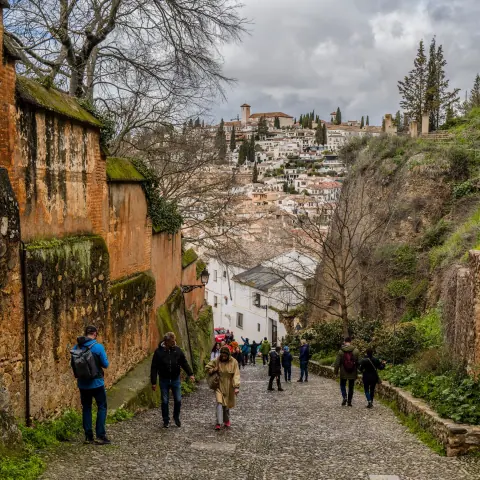
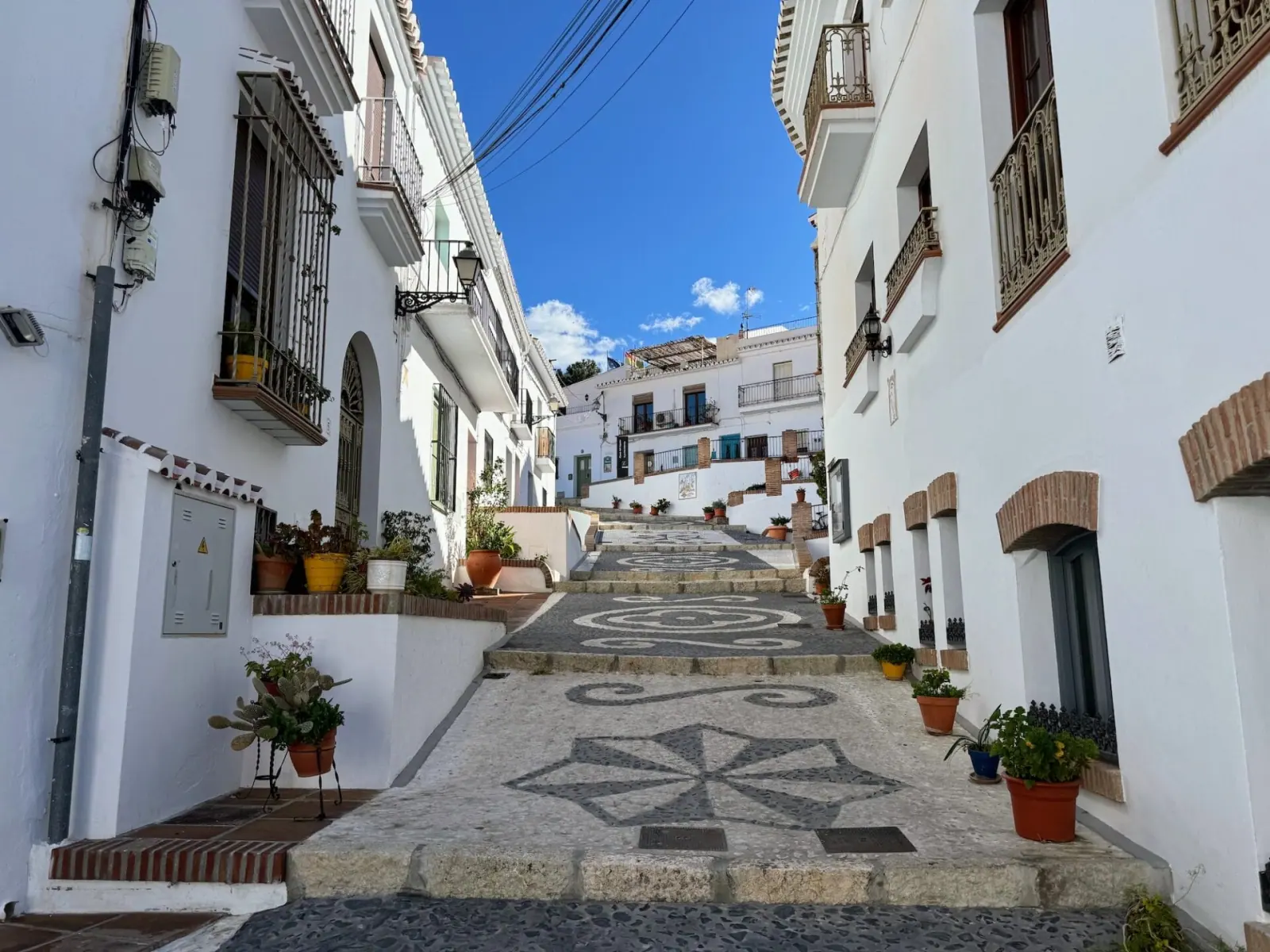
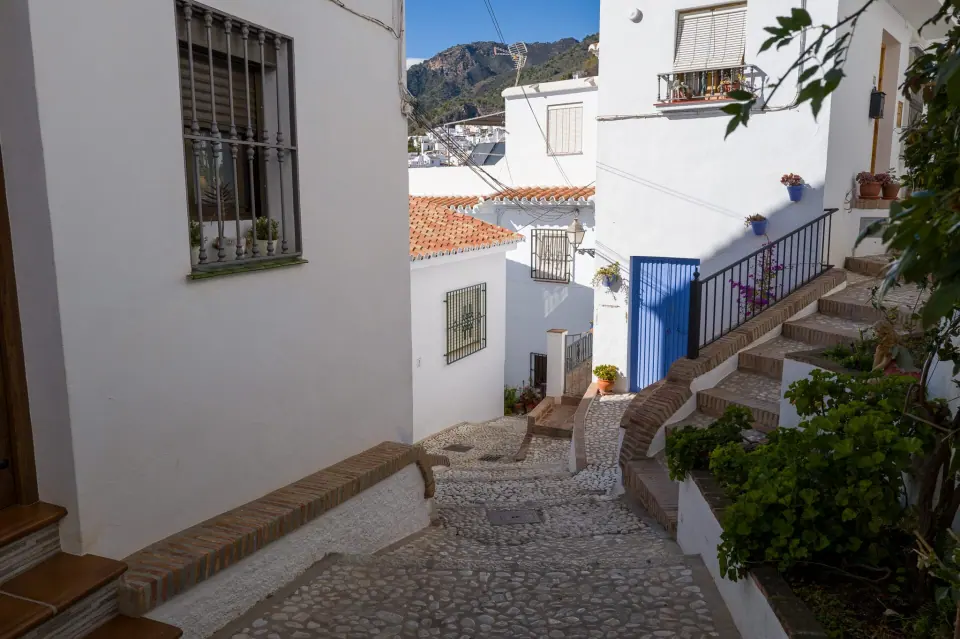
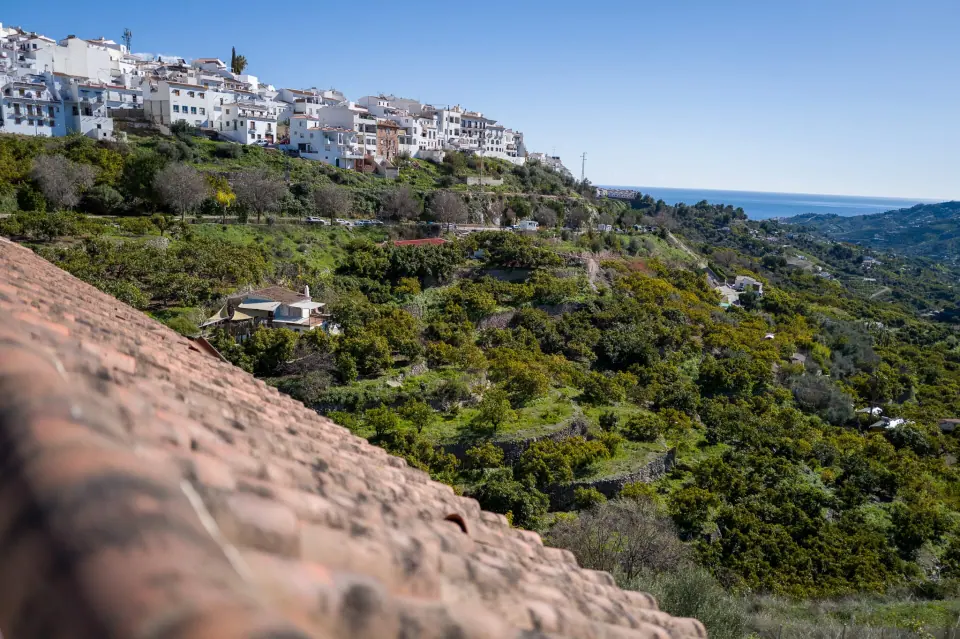
The old quarter is the main reason to come. Its cobblestone lanes were laid out in the Moorish era and form a maze of whitewashed houses with bougainvillea spilling over the walls. It is very good for photography, and the artisan shops scattered through it sell handmade crafts from the region. Give yourself time to wander without a map: every turn shows another well-kept house front, and getting slightly lost is part of the visit.
Lízar Castle dates from the 9th century and was destroyed in 1569, so only foundations remain, but the site sits above the village and the panoramic view is the reward: the Mediterranean on one side, the hills and the Sierra de Almijara on the other. The way up passes through attractive countryside. Go late in the day if you want to watch the sunset.
The coast at Nerja is a short drive away, so you can spend the morning in the hills and the afternoon on the beach.
La Fuente Vieja is a fountain built around 1640 by the lord of the town, whose coat of arms it still carries. It is a calm place to pause between sights.
Hiking and nature
The Sierra de Almijara lies just beyond the village. Its trails suit every level, from gentle walks to demanding hikes, and they take you into open countryside with wide views. Bring water and proper shoes for anything longer than a stroll.
Using Frigiliana as a base: Cómpeta, the coast and village life
Frigiliana is small enough to see in a day, but it also works well as a base for other white villages, the beaches and Málaga. Having hills, coast and city within a short drive is the practical argument for staying here instead of passing through.
Frigiliana and Cómpeta
Frigiliana and Cómpeta both rank among the best white villages in Andalusia. If narrow, flower-lined streets and whitewashed houses are what you came for, plan to see both.
Valley walks and mountain treks
From the village you can choose between easy walks in the valleys and ambitious treks into the mountains. Pick a route that matches your fitness, because the terrain ranges widely.
Beaches and the city
A short drive takes you down to the sandy beaches of Nerja, and the museums, shops and restaurants of Málaga are within reach for a day out, so one base covers village, beach and city.
Markets and festivals
Village life goes beyond the monuments. Artisan markets and local festivals run through the year and show how active the community is, so check what is on during your stay.
Practical tips for visiting Frigiliana
Visit in spring or autumn, get around on foot and book your room early. The details are below.
Best time to visit
The best times to visit Frigiliana are spring (March to June) and autumn (September to November), when the weather is pleasantly warm and the village is less crowded. Winters are mild and summers are warm. The Festival of Three Cultures takes place in late August (27 to 30 August in 2026), with music, food and dance, so come then if the festival matters more to you than quiet streets.
Getting to Frigiliana
Frigiliana is about 60 kilometers from Málaga and 6 kilometers from Nerja, close enough for a day trip from either, and pleasant enough for a longer stay.
- From Málaga: go by car, or take a bus to Nerja and change there for the local bus. A rental car lets you explore at your own pace.
- From Nerja: a local bus connects the two from Monday to Saturday, with no service on Sundays or public holidays at the time of writing, so check the timetable. Otherwise take a short taxi ride.
Getting around Frigiliana
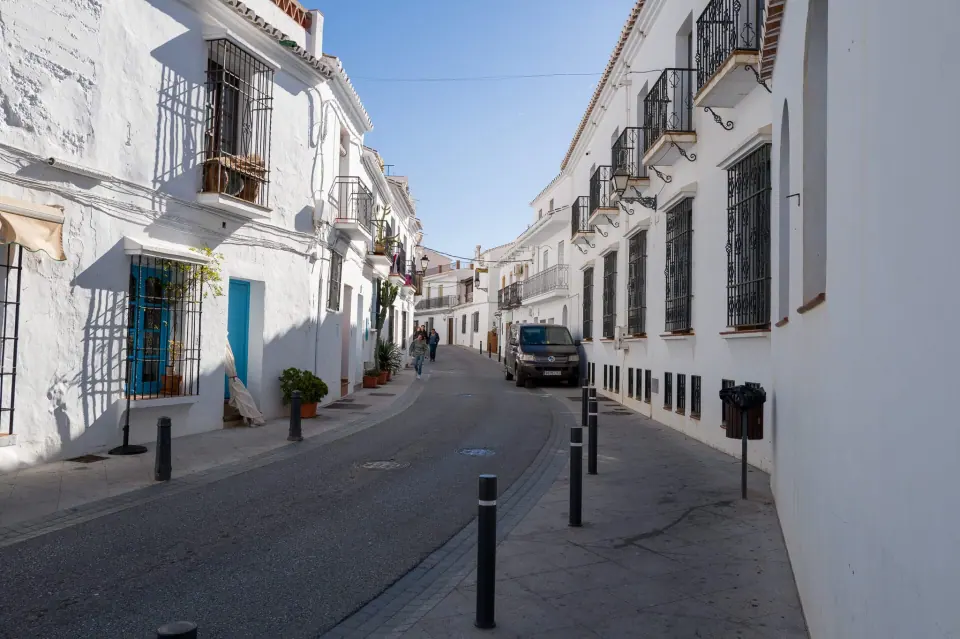
Explore on foot. The narrow streets are largely pedestrianized, and they are steep and uneven, so wear comfortable walking shoes. Allow for the climbs when you plan your day, especially in the heat.
Where to stay
You can choose between small boutique hotels in the old town and vacation rentals with views over the countryside, at a range of prices. Staying in the old town puts you inside the pedestrian lanes, while a rental outside it trades that for the views. Book in advance if you are coming in peak season or during a festival.
Eating and shopping
Eat at the traditional restaurants and tapas bars, and try the regional specialties: migas, local wines and the sweet molasses called miel de caña, made in the village at the Ingenio, which is described as the only cane honey factory still working in Europe. For shopping, the artisan shops sell ceramics, textiles and local produce that travel well as souvenirs.
Driving the mountain road from Torrox to Frigiliana
If you have a car, arrive by the mountain road from Torrox. It is the scenic way in, and the drive is worth doing for its own sake. Treat it as part of the visit: drive slowly, stop for the views and arrive unhurried.
The route
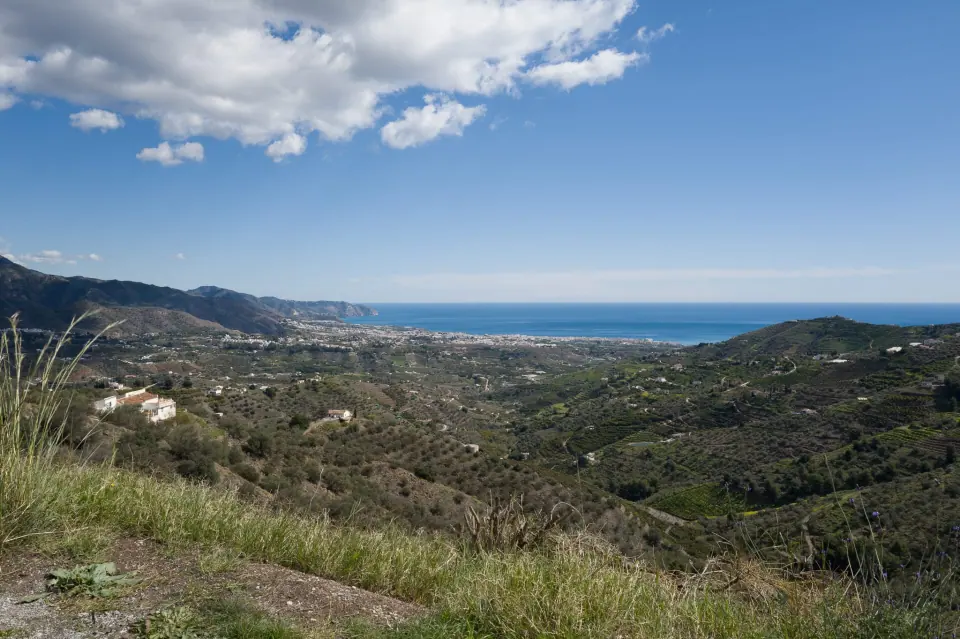
The road climbs from Torrox through rolling hills. Each bend opens a new view of the Mediterranean, olive groves and the mountains in the distance.
Where to stop
There are several places along the road where you can pull over for the view and for photos. Sunrise over the sea and sunset behind the mountains are the best moments, so time your drive for one of them if you can. Pull fully off the road when you stop, since it is narrow.
Driving tips
The road is narrow and winding in places. Keep to a moderate speed and watch for cyclists, other drivers and wildlife. Take the bends slowly even when the road looks empty. It helps to be comfortable driving on hills.
Arriving in Frigiliana
As you approach, the white buildings of the village come into view against the Sierra de Almijara. The change from open hillside to village streets is quick, so have the camera ready. Allow extra time for the trip, since you will want to stop more than once.
Before you go: official information and map
Leave some unplanned time in your day. The moments visitors tend to remember are simple ones: sunset from the ruins of Lízar Castle, a conversation with a local artisan, or an early morning walk through the alleys before the village gets busy. Frigiliana has kept its character, and it rewards a slow visit more than a rushed one.
Official Frigiliana tourism website
Frigiliana map: