On this page 7 sections
A long layover is easier to get through with a plan. This guide gives you six things to do inside the terminal: people-watching with a purpose, tracking down the airport’s lesser-known corners, building a travel playlist, setting up a quiet spot to rest, running a souvenir scavenger hunt and taking a break from your phone. Most of them cost nothing and need no equipment beyond what is already in your bag.
1. People-Watch Like an Anthropologist
People-watching is the cheapest layover activity there is, and a few simple rules turn it into a game. An airport gathers travelers from all over the world, each with a destination and a reason for going, so you will not run short of material.
Observe the travelers
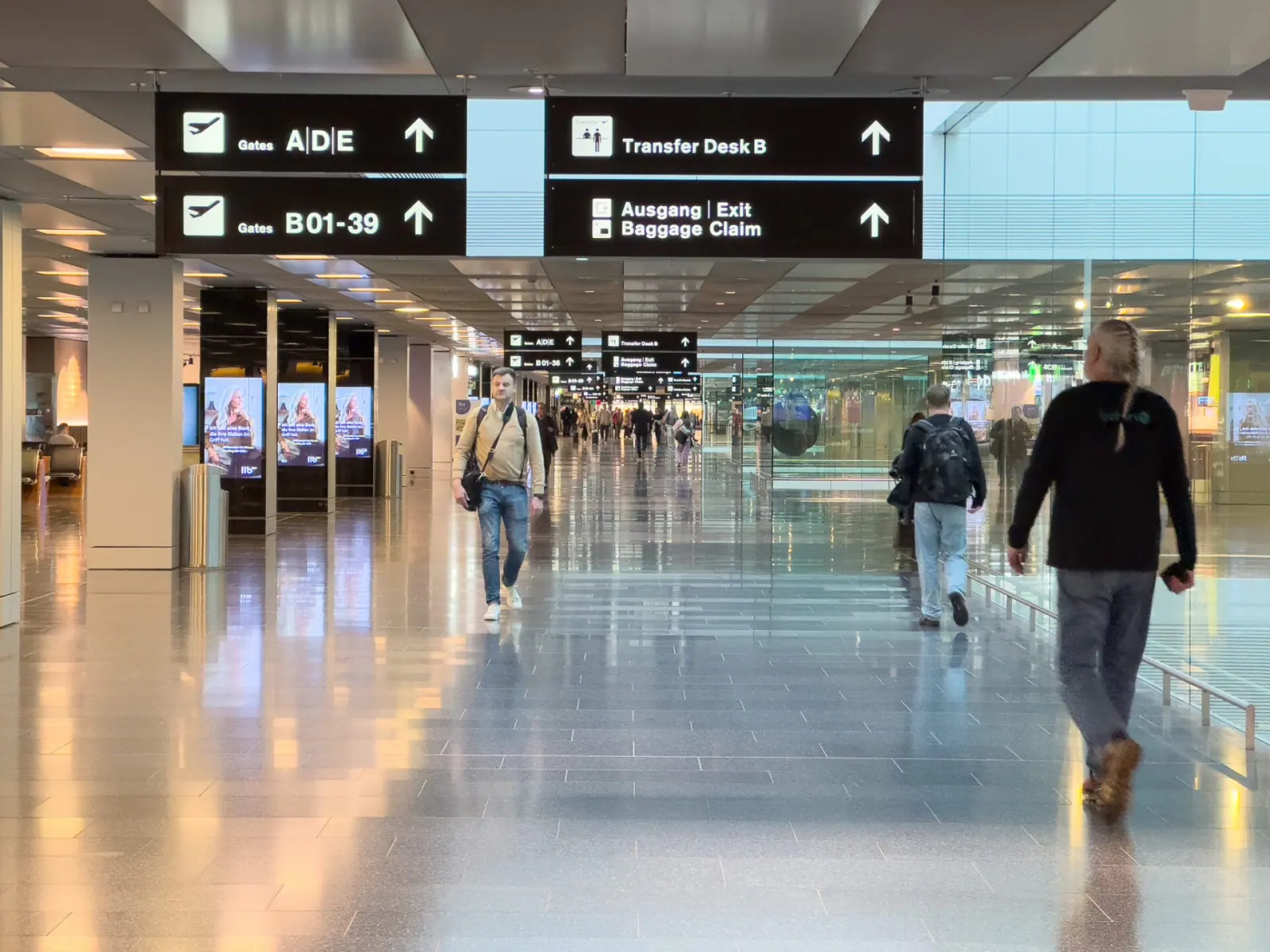
Find a comfortable seat with a clear view of the passing crowd. Watch the hurried business travelers, the excited families and the people traveling alone. Notice their body language, how they talk to each other and what they carry.
Invent backstories
Make up a story for each person you watch. The man in the tailored suit might be a secret agent on a mission, or an anxious businessman about to pitch a deal. The family with matching backpacks could be starting a trip around the world, or visiting relatives they haven’t seen in years. It is entertaining, and thinking about why people travel is a small exercise in empathy.
Identify a fashion trend
Pick one trend in the crowd: flashy travel pillows, oversized sunglasses or a brand that seems to be everywhere. Then give it a name. “Globetrotter Glam” could cover the people who look stylish in comfortable clothes, and “Jet-Set Joggers” the many travelers in athleisure.
Track the trend
Count how many people you spot wearing it and keep a tally on paper or in your phone’s notes app. You can also guess which gates or flights will have the most examples, then go and check. The count keeps you alert, and it gives you a small picture of how many cultures pass through one building in an afternoon.
Reflect on your findings
After a while, look back at what you saw. Ask yourself what people’s clothes suggest about their personality or where they are heading, and what your invented stories have in common. By the time you have an answer, a good part of the wait is behind you.

2. Track Down the Airport’s Lesser-Known Corners
Many airports have gardens, observation decks, art installations and cultural exhibits beyond the duty-free shops and boarding gates, and finding them is a good use of a long wait.
Start with a map and a question
Pick up an airport map or ask staff about unusual spots in the terminal. The quiet areas are often not advertised, so you find them by exploring or by word of mouth. Give yourself a time limit that leaves a comfortable margin to get back to your gate.
Gardens and green spaces
Some terminals have a garden among the steel and glass of the airport terminal. The best-known example is the Butterfly Garden at Singapore’s Changi Airport, a green space where you can sit quietly before your next flight.
Observation decks
Some airports have observation decks where you can watch planes take off and land with the city or the mountains behind them. Aviation fans will enjoy them most, but they also suit anyone who wants a quiet place to sit and watch the runway for a while.
Art installations and cultural exhibits
Airports increasingly show art installations, historical exhibits and local crafts that give you a glimpse of the region’s culture and heritage. Travelers mention the art exhibits at San Francisco International Airport and the traditional music performances at Incheon International Airport in Seoul.

What other travelers have found
One traveler described a quiet reading room in a corner of Amsterdam’s Schiphol Airport, with comfortable chairs and a wide selection of books. Another found a small cinema screening short films at Portland International Airport.
Plan the search
Next time you have a few hours to spare, choose one thing to look for, such as a garden, an observation deck or an art installation, and go and find it. You will at least stretch your legs and see more of the building than the gate area.
3. Build a Travel Playlist
An hour of waiting is enough to build a set of playlists for the rest of your trip, one for each stage of the journey.

Step 1: Split the journey into stages
Decide which moments of the trip you want music for, and make a short list for each:
- Takeoff tunes: Songs that build energy as you leave the ground.
- Window-gazing: Quieter music for cruising altitude, when you are thinking or looking at the view.
- Destination vibes: Tracks that match the culture or atmosphere of the place you are going.
- Layover loops: Relaxed beats for the waits.
Step 2: Choose the songs
Go through your music library or a streaming service and find songs for each stage. Look at new releases, try genres you wouldn’t usually play or bring back old favorites that carry memories. You are the DJ for this trip, so mix as you like.
Step 3: Make it personal
Include songs that mean something to you: a track from a previous trip, or one that matches how you feel about this one. Those choices turn a list of songs into a soundtrack of your travels.
Bonus: talk to other music lovers
Look around for other travelers nodding along to their headphones or scrolling through playlists. If someone shows interest in what is on your screen, compare favorite travel songs and swap recommendations. You may leave with new music.
Extra tip: share your playlists
When the playlists are done, share them on social media or send them to friends who are about to travel. Your list may be the thing that improves their own long wait.

Find a Quiet Spot to Rest
The quietest seats in an airport are usually at the ends of the terminals or near gates serving long-haul departures. Once you have a spot, a few items and a simple routine will help you rest before your next flight, which is especially useful if flying makes you nervous.
Step 1: Scout for a secluded spot
Look for the less crowded areas first. Observation decks and less-frequented lounges are good escapes, and even a seat near an unused gate can give you the peace you are after.
Step 2: Set up your space
Lean against a wall or window and use a travel pillow as a cushion. An eye mask blocks out the terminal and signals to your brain that it is time to unwind. Noise-cancelling headphones or earplugs mute the background noise.
Step 3: Try a guided meditation
Meditation apps offer guided sessions that calm the mind and ease anxiety. Choose a short 10-minute session focused on breathing, or a longer guided visualization. Many apps include sessions aimed at travel anxiety, which can make flying more manageable.
Step 4: Practice mindful breathing
For a simpler approach, focus on your breath. Inhale slowly through your nose, hold for a few seconds and exhale through your mouth. The technique reduces stress, lowers your heart rate and calms mind and body. It needs no app and no equipment, so it works even when your phone battery is low.
Step 5: Change how you see the wait
Rest depends on mindset as much as location. Treat the layover as free time to read, think or do nothing, and it stops feeling like an inconvenience.
Optional: use the airport’s relaxation facilities
Some airports have designated quiet rooms, yoga spaces or full-service spas. They are worth seeking out if you are willing to explore or spend a little.
4. Run a Souvenir Scavenger Hunt
Set yourself a list of things to find and souvenir shopping becomes a way to learn about the place you are passing through. The aim is to skip the usual magnets and keychains and come away with something that says where you were.
1. Set your goals
Decide what you are looking for before you start. Aim for items that tell a story, represent the local culture or reflect the airport’s history. Your list might include:
- A local delicacy or snack unique to the region.
- Something handmade by local artisans.
- Anything featuring the airport’s architecture or mascot.
- A book or magazine with work by local writers or photographers.
- Music or a musical instrument native to the area.
2. Research and plan
Look up the airport online to see whether any specialty shops or sections showcase local culture. Some airports also have exhibits or installations on local history or achievements, which can be a source of unusual souvenirs.
3. Begin the hunt
Take your list and visit different terminals and shops. Take your time. Talk to shopkeepers and ask about the story behind each item. The point is to come away with things that mean something, so a short list of good finds beats a full bag.
4. Document your finds
Photograph each item you find. If you are traveling with companions, compete to see who ticks off the most. Post your finds on social media or note in a travel journal where you found each one and why it matters.
5. Share the story
Tell friends and family how you found each item, in person, on social media or on a blog. The story is half the value of a souvenir.
Scavenger hunt ideas:
- The local flavor: A spice or ingredient used in the region’s cuisine.
- Artisan’s choice: A piece of jewelry or artwork that shows local craftsmanship.
- Musical notes: A CD of local music or, with luck, a small traditional instrument.
- Literary local: A postcard with work by a local artist, or a bookmark from a local bookstore.
- Historical token: A replica of a historical artifact, or a postcard showing the airport’s original architecture.

5. Take a Digital Detox
A layover is a convenient time to put your phone away for a few hours, since nobody expects you to be reachable. Here is how to structure the break so you don’t drift back to the screen.
1. Set your intentions
Decide how long the detox will last, perhaps the whole layover, and what you want from it: less stress, more attention to your surroundings or simply a rest.
2. Try mindfulness exercises
When you feel the urge to check your phone, do something else. Deep breathing, mindful observation and slow walking all work. Find a quiet spot, take a few deep breaths and pay attention to the flow of travelers, the textures around you and the sounds you usually tune out.
3. Write in a journal
Use the time to write down your thoughts, doodle or write a letter to your future self. You could also record your trip so far, sketch what you see or list things you are grateful for. Writing by hand is a good way to hold on to memories.
4. Engage with your surroundings
With your devices put away, start a conversation with another traveler, study the architecture or simply people-watch. Airports bring many cultures together, and you never know who you will meet.
5. Practice gratitude
Think about the journey so far, the places you will visit and the people you will meet. It moves your attention from what you are missing online to what is in front of you.
6. Plan what comes after
Consider how to carry the habit into daily life. You might set screen-free times of day or practice mindfulness more regularly. A layover is a low-stakes place to start a healthier relationship with technology.
Which Activity to Choose
Match the activity to your energy. If you are tired, set up a quiet spot and rest. If you are restless, go looking for the airport’s gardens, decks and exhibits or run the souvenir hunt. People-watching, a playlist and a phone-free hour work from any seat near your gate.